
What Is a Police and Social Worker Partnership?
A police and social worker partnership pairs sworn officers with trained social workers so that calls involving a mental health crisis, homelessness, or family conflict get both a safety response and a care response. The social worker assesses needs, de-escalates, and connects the person to services; the officer keeps the scene safe. Camden’s Village Initiative is one of the models cities are copying.
Key Takeaways
- The partnership pairs officers with social workers on calls that are not criminal at their core.
- Camden’s Village Initiative is the case study most cities point to.
- Benefits include fewer arrests, fewer repeat calls, and better connections to services.
- Scaling is limited by clinician supply, funding, and data-sharing rules.
Why Are Police and Social Worker Partnerships Emerging?
The model gained traction as communities recognized three significant challenges:- Mental Health & Addiction Crises Rising Roughly one in five adults in the U.S. experiences mental illness each year, and substance use disorders continue to fuel overdose deaths. Traditional policing approaches have struggled to address these challenges effectively.
- Overreliance on the Criminal Justice System For decades, people in crisis have been funnelled into jails instead of treatment programs. This often worsens the underlying issues while straining courts, correctional facilities, and taxpayers.
- Community Trust in Law Enforcement Incidents of excessive force and misaligned crisis responses have eroded public trust. Residents increasingly call for models that prioritize de-escalation and compassion.
Case Study: Camden’s Village Initiative
In Camden, New Jersey, the Village Initiative represents one of the most innovative examples. Since launching in 2020, the program has paired Camden County officers with social workers from the Center for Family Services. Together, they respond not only to emergency calls but also proactively engage with residents struggling with homelessness, addiction, and poverty. Outreach is continuous and persistent—sometimes offering supplies and resources, and at other times, transporting individuals directly to treatment centers or housing. The results are striking: Camden reported a 37% drop in fatal overdoses in the first half of 2025 compared to the same period in 2024. For a city battling overlapping challenges of poverty, addiction, and housing insecurity, that’s a life-saving shift.Which Other Cities Are Pioneering the Model?
Camden is not alone. Across the United States, variations of this model are taking hold:- CAHOOTS (Crisis Assistance Helping Out On The Streets) – Eugene, Oregon Operating since 1989, CAHOOTS dispatches teams of medics and crisis workers instead of police for many nonviolent calls. It handles up to 20% of 911 calls in Eugene, demonstrating the effectiveness of non-police-led responses.
- Denver STAR Program (Support Team Assisted Response) Launched in 2020, STAR dispatches mental health clinicians and paramedics to select crisis calls without involving the police. A 2022 study showed STAR reduced low-level crime reports by 34% in its service areas.
- NYC B-HEARD (Behavioral Health Emergency Assistance Response Division) New York City’s pilot program dispatches teams of EMTs and mental health professionals to behavioral health crises. Early results show individuals are more likely to accept help when responders are non-police professionals.
What Are the Benefits of Police and Social Worker Partnerships?
The advantages of these collaborations extend beyond single success stories:- Crisis De-escalation Social workers bring skills in trauma-informed care, motivational interviewing, and de-escalation—reducing the risk of force being used.
- Reduction in Unnecessary Arrests Instead of jailing someone for disorderly conduct linked to mental illness or addiction, individuals can be redirected into treatment.
- Cost Savings Incarceration and emergency room visits are expensive. Studies show crisis intervention programs save municipalities millions by reducing repeat arrests and ER admissions.
- Stronger Community Relationships When residents see that officers are showing up with helpers—not just handcuffs—it builds trust and legitimacy.
- Officer Relief Police are freed from handling situations they aren’t fully trained for, allowing them to focus on crime prevention and public safety.
What Are the Challenges and Barriers to Scaling?
While promising, these partnerships face hurdles:- Training & Cultural Integration: Police and social workers come from different professional cultures. Training and cross-agency collaboration are vital for trust.
- Funding & Sustainability: Pilots often rely on grants; long-term adoption requires dedicated funding streams.
- Dispatch Protocols: Deciding when to send co-response teams vs. alternative responders remains a work in progress.
- Data Sharing: Agencies must navigate privacy laws while ensuring that information flows quickly enough to connect individuals to the services they need.
Julota’s Role in Supporting Partnerships
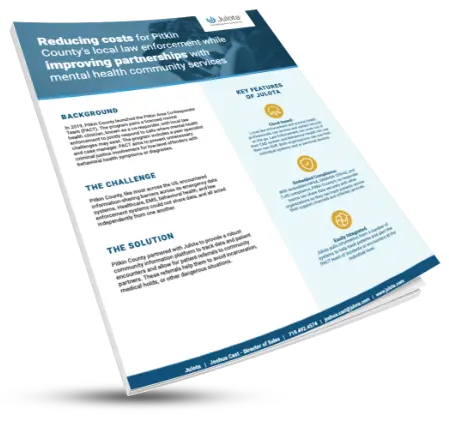
A critical but less visible piece of these partnerships is technology and data interoperability. That’s where platforms like Julota play a role. By enabling law enforcement, social workers, hospitals, and community-based organizations to share information securely, Julota helps teams:- Identify individuals who need follow-up after a crisis.
- Track service referrals and outcomes.
- Reduce duplication of effort across agencies.
- Measure the long-term impact of co-response models.
What Is the Future of Public Safety?
The momentum behind police and social worker partnerships is growing. Cities across the U.S. are piloting, expanding, or institutionalizing co-response and alternative response models. Policymakers are also taking note, as data increasingly shows these programs improve outcomes while lowering costs. In the future, we can expect:- Wider integration of health and social care providers into emergency response.
- Expanded training so more officers understand trauma-informed practices.
- Stronger federal and state funding to sustain these models.
- Continued innovation in technology platforms to ensure agencies work as one team.
Conclusion
The evidence is mounting: police and social worker partnerships save lives, reduce unnecessary arrests, and restore trust between communities and law enforcement. Camden’s Village Initiative, Denver’s STAR program, and Eugene’s CAHOOTS all demonstrate that when enforcement is paired with compassion, everyone benefits. As more cities adopt this model, the future of public safety may look very different from the past: less about punishment, more about problem-solving. With the right partnerships, training, and tools, communities can create a system that is safer, fairer, and more humane.Related reading
Frequently Asked Questions
What are the benefits of social workers in police departments?
Social workers handle the clinical and social needs officers are not trained for, which shortens calls, reduces unnecessary arrests, and cuts repeat contacts with the same individuals. They also carry follow-up after the call ends, which is where most of the durable improvement actually comes from.
How do police and social workers work together on a call?
Models vary. Some agencies embed a social worker who rides along and responds jointly. Others dispatch the social worker after the fact for follow-up, and some run a co-located team that reviews cases together without riding together. The right structure depends on call volume and available clinical staffing.
Do social workers replace police officers?
No, and framing it that way misreads the model. Partnerships assign each profession the calls it is trained for, so officers keep responding where there is a safety risk and clinicians take the lead on behavioral health needs. The point is matching the responder to the problem.
What are the biggest barriers to scaling these partnerships?
Sustainable funding is the usual constraint, since many programs start on grants that expire. Beyond money, agencies struggle with hiring and retaining clinicians, with information sharing across agencies that use separate systems, and with the cultural work of getting two professions to trust each other’s judgment.