Homeless Outreach Case Management Software That Connects Every Partner

Julota is homeless outreach case management software for the teams asked to solve some of the community’s most complex challenges with limited resources, fragmented systems, and incomplete data.

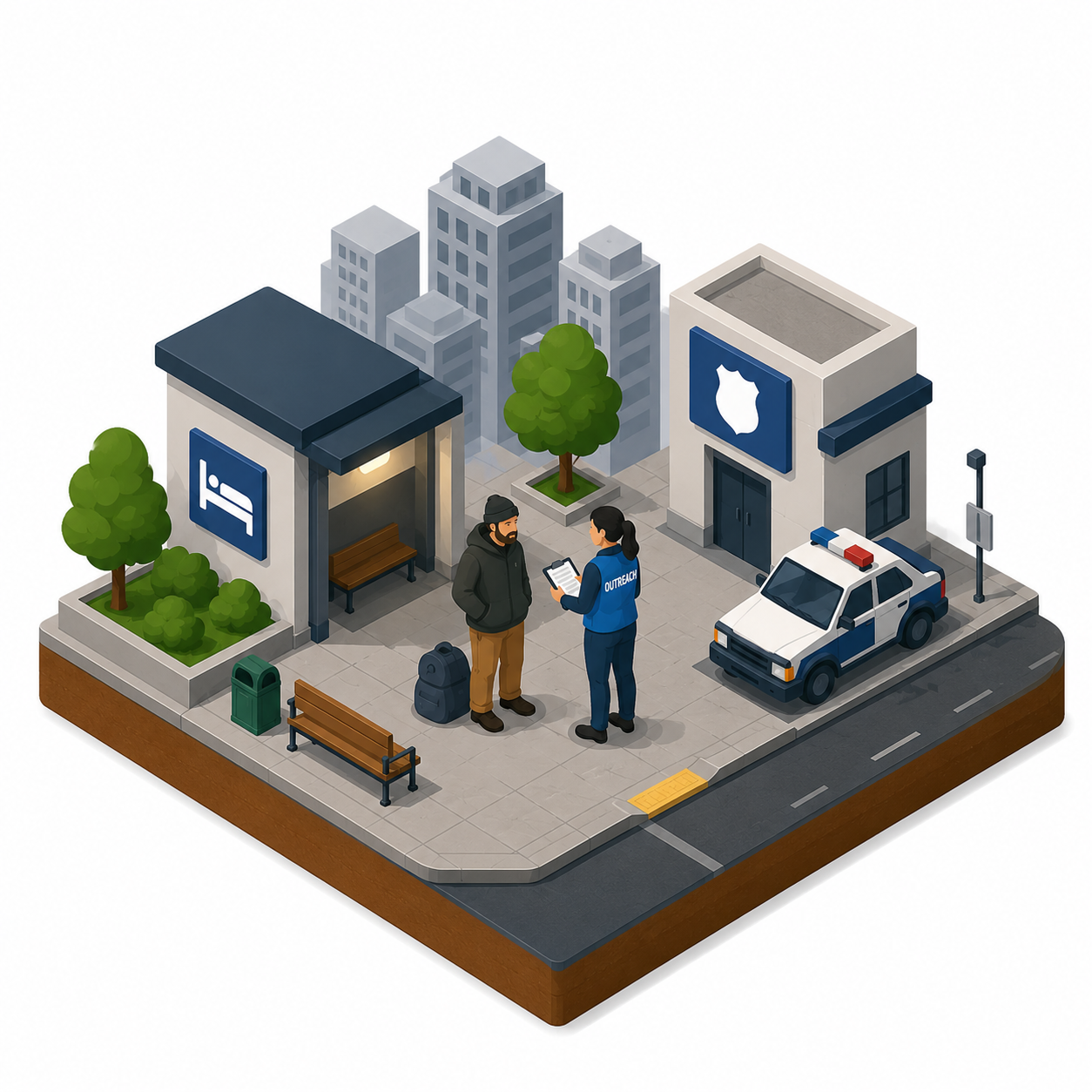
Outreach workers, housing teams, behavioral health providers, law enforcement, code enforcement, shelters, and community paramedics may all be serving the same individuals. Still, too often they work from separate systems, notes, and workflows.

Julota helps homeless outreach programs bring the right partners together in one secure, coordinated platform so teams can reduce duplicated efforts, improve follow-up, connect people to the right services, and clearly report the impact of their work.

What Is Homeless Outreach Case Management Software?

Homeless outreach case management software is the shared record an outreach program uses to document street encounters, open a case, send referrals to shelter, housing, treatment, and benefits partners, assign follow-up, and report outcomes for every person served. An HMIS records what the Continuum of Care needs for HUD; it does not run the day-to-day coordination between the outreach worker, the co-responder, the clinic, and the shelter. Julota does that work, connects to your HMIS so nobody is entered twice, and keeps access consent-based and role-based under HIPAA, 42 CFR Part 2, and CJIS.

What Julota’s Homeless Outreach Case Management Software Includes

  • Street encounter documentation: record the contact in the field, with location, so a person without an address can be found again.
  • Closed-loop referrals: send a referral to a shelter, housing navigator, clinic, or treatment provider, see it accepted, and get the outcome back.
  • Follow-up tasks and partner notifications: assign the next step to a named person at a named agency so nothing depends on a phone call.
  • HMIS integration: connect to your Continuum of Care’s HMIS so the same client is not entered twice and HUD reporting stays intact.
  • Consent-based, role-based sharing: outreach, police co-response, behavioral health, shelters, and community paramedics see only what their role and the client’s consent allow.
  • Housing status and service notes: track where each person is in the housing process and which services actually connected.
  • Program reporting: encounters, referrals completed, people housed or connected to care, and repeat contacts avoided, sent to funders automatically.
  • Browser-based on any device: works from the field or the office with no hardware to buy.

The Challenge:

Homeless Outreach Is a Team Effort, But the Data Is Often Disconnected

Effective homeless outreach requires strong partnerships, timely communication, and reliable information sharing. Without a connected system, outreach teams are unknowingly creating new blindspots.

When outreach outcomes are difficult to track, it becomes harder to secure funding, expand services, demonstrate program value, and show policymakers what is actually working.

Common Struggles:

Julota Unifies Your Entire Homeless Outreach Network

Julota makes it easier for homeless outreach teams and community partners to coordinate care for people experiencing homelessness securely.

Our cloud-based platform can support outreach teams, veteran assistance programs, housing-first initiatives, behavioral health partners, law enforcement co-response teams, code enforcement, shelters, and MIH-CP programs in one secure, shared environment.

No special hardware is required. Teams can access Julota from the field, the office, or wherever outreach happens.

Critical Access Hospitals

Behavioral Health

Substance Abuse Services

Law Enforcement

Built for the People and Programs Doing the Work

Julota supports the teams that help people move from crisis and instability toward connection, safety, and long-term support.

Customized Workflows That Keep Everyone Informed

Every homeless outreach program is different. Julota can be configured around your community’s needs, partners, workflows, and reporting requirements.

Your team can use Julota to help manage:

Working with people in the field? Julota’s location-based tools can help teams document where outreach occurred, making it easier to follow up with individuals who may not have a permanent address.

Secure, Permission-Based Data Sharing for Complex Outreach Networks

Homeless outreach often involves sensitive information across healthcare, behavioral health, substance use treatment, social services, and public safety.

Julota is designed to help communities share the right information with the right partners while protecting sensitive data through secure, permission-based access.

That means your outreach team can coordinate across agencies without relying on scattered spreadsheets, disconnected notes, or informal communication channels that make follow-up harder to manage.

Fully Compliant With Healthcare, Substance Use Treatment, and Law Enforcement Privacy and Security Regulations

Seamless ePCR Solution Integration

Smooth EHR Integration

Homeless Outreach FAQs

What types of homeless outreach programs can use Julota?

Julota can support a wide range of homeless outreach models, including street outreach teams, housing navigation programs, veteran assistance programs, shelter coordination teams, behavioral health outreach, law enforcement co-response, code enforcement outreach, and MIH-CP programs.

Julota provides approved partners with a secure place to document encounters, submit referrals, assign follow-ups, share updates, and track outcomes. This helps reduce duplicated work and gives teams better visibility into what has already happened.

Yes. Julota can be configured to collect the data your program needs for internal reporting, grant reporting, leadership updates, and community impact reports.

No. Julota is not designed to replace every system your partners use. It helps connect outreach activity, referrals, follow-up, and outcome tracking across agencies so your team can coordinate more effectively.

Yes. Julota is cloud-based and accessible in the field, allowing outreach teams to document encounters, add notes, manage follow-ups, and capture location-based information when appropriate.

Julota uses secure, permission-based access so that different partners can view and contribute information based on their roles and authorizations. This is especially important when outreach involves healthcare, behavioral health, substance use, social services, and public safety partners.

Julota can support referral workflows that make it easier for approved partners to submit information without creating unnecessary complexity for the broader network.

Spreadsheets and isolated notes can help track activity, but they do not create a coordinated outreach network. Julota helps teams manage referrals, services, follow-up, partner communication, and reporting on a single secure platform.

The Julota Mobile Integrated Healthcare platform can cost anywhere from $5,000 to $45,000 a year. The cost depends on three factors:

  • The size of the population you serve
  • Number of active clients
  • Extent of al a carte add-ons

Here's What Our Excellent Clients Say...

Is Your Homeless Outreach Program Ready to Prove Its Impact?

We would be delighted to show you a demo, put you in touch with current customers, and answer any questions you have. Reach out anytime.