Coordinate Opioid Research. Reduce Fatal Overdoses, ED Visits, and Prove Your Program Works.

One of opioid response team’s greatest strengths may also be their biggest pitfall. The first responders can be the most ideal people to connect with substance abusers as they’re oftentimes the only provider who sees them after an overdose or episode. The problem? They are just that, the only responder.

Effective opioid response programs require strong communication partnerships and reliable data sharing to avoid duplication of services in a cost-effective manner.

Historically? Data and systems that don’t talk to each other and workflows with endless gaps make your program more likely to encounter:

And when you don’t meet goals in opioid response, policymakers are unhappy, grants are harder to get, and when the time comes, reimbursement opportunities may be out of reach.

Julota Unifies Your Entire Opioid Response Network

We work with your program to understand your entire process from first contact to handoffs to behavioral health or social services.

What do we focus on?

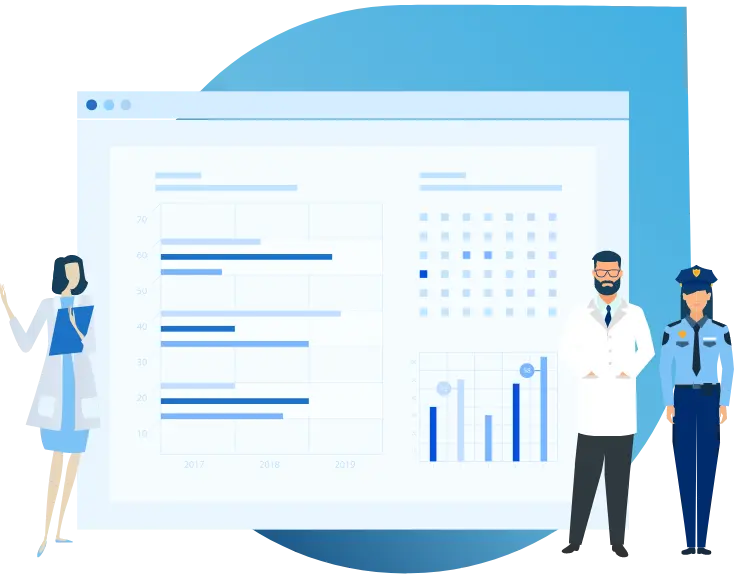
Secure data sharing across agencies with no hardware changes or complex training for you or your partners. Julota’s cloud-based platform works on any device and brings everyone together in one simple, secure interface.

First Responders

Behavioral Health

Treatment Centers

Social Services

Community Task Forces

Connecting Your Opioid Response Program with Your Community

Julota helps Opioid Response Programs connect substance users with the proper social services and behavioral treatment to ensure they receive the help they need, without an escalation of care.

Customized Workflows That Keep Everyone Informed

Every opioid response program is different. Julota can be configured around your community’s needs, partners, workflows, and reporting requirements.

Your team can use Julota to help manage:

Working with people in the field? Julota’s location-based tools can help teams document where outreach occurred, making it easier to follow up with individuals who may not have a permanent address.

Automated Customized Workflows for Opioid Response Programs That Keep Everyone Informed

Julota will customize your data collection fields and the reports you can generate from the system to meet the needs of your organization, community, and funders. This makes it easier to apply for funding and report back to policymakers and grant funders.

Working with people without housing? Use the built-in GPS to note their location.

Fully Compliant With Healthcare, Substance Use Treatment, and Law Enforcement Privacy and Security Regulations

Seamless ePCR Solution Integration

Smooth EHR Integration

Opioid Response FAQs

What types of opioid response programs can use Julota?

Julota can support a wide range of opioid response models, including overdose response teams, post-overdose outreach (quick response teams), harm reduction and syringe services programs, medication-assisted treatment (MAT) navigation, EMS/fire co-response, law enforcement diversion programs, peer recovery support services, and mobile integrated health-community paramedicine (MIH-CP) programs.

Julota provides approved partners with a secure place to document encounters, submit referrals, assign follow-ups, share updates, and track outcomes. This helps reduce duplicated work and gives teams better visibility into what has already happened.

Yes. Julota can be configured to collect the data your program needs for internal reporting, grant reporting, leadership updates, and community impact reports.

No. Julota is not designed to replace every system your partners use. It helps connect outreach activity, referrals, follow-up, and outcome tracking across agencies so your team can coordinate more effectively.

Yes. Julota is cloud-based and accessible in the field, allowing outreach teams to document encounters, add notes, manage follow-ups, and capture location-based information when appropriate.

Julota uses secure, permission-based access so that different partners can view and contribute information based on their roles and authorizations. This is especially important when outreach involves healthcare, behavioral health, substance use, social services, and public safety partners.

Julota can support referral workflows that make it easier for approved partners to submit information without creating unnecessary complexity for the broader network.

Spreadsheets and isolated notes can help track activity, but they do not create a coordinated outreach network. Julota helps teams manage referrals, services, follow-up, partner communication, and reporting on a single secure platform.

The Julota Mobile Integrated Healthcare platform can cost anywhere from $5,000 to $45,000 a year. The cost depends on three factors:

  • The size of the population you serve
  • Number of active clients
  • Extent of al a carte add-ons

Here's What Our Excellent Clients Say...

Is Your Opioid Response Program Ready to Prove Its Impact?

We would be delighted to show you a demo, put you in touch with current customers, and answer any questions you have. Reach out anytime.