
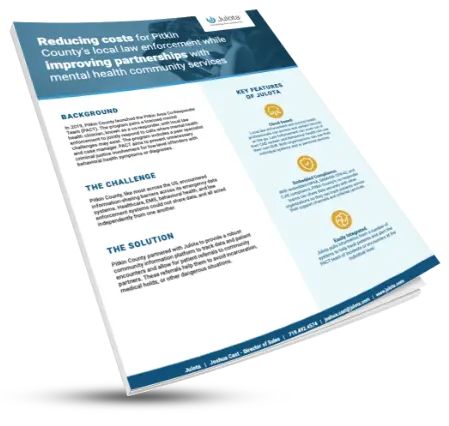
MIH-CP supports population health through partnerships with other local resources. They actively participate in several ways, including conducting health screenings for serious diseases, providing guidance for those with housing or food insecurity, providing vaccinations and preventive care, and working to expand primary care coverage across the country.
As we dive deeper into this topic, think about some of the most pressing ways MIH-CP could make an impact on population health in your area.
Improving Population Health Through MIH-CP
The Mobile Integrated Health-Community Paramedicine model is incredibly effective for many reasons. One way it excels is by focusing on both the individual and the population. When these two things are in balance, a community has the best chance at being its very best.
How does MIH-CP strike this balance? You might say that mobile integrated health is there to help those individuals who comprise the fringes of society. These include people in rural areas, underserved infants and mothers, and those who don’t have easy access to primary care.
Where many parts of healthcare can inadvertently overlook these underserved parts of the population as “just a small percentage,” MIH understands that when one part of a community goes overlooked (even just a small group) the entire group suffers.
In a sense, MIH-CP thinks of an entire population as a family. When one member of a family is struggling, the others don’t just throw up their hands and say, “At least we’re doing great!” No. Instead, they recognize that if one of their own is hurting, this impacts everyone’s well-being.
With that said, let’s jump into it.
Here are several ways that MIH-CP can improve population health:
- MIH supports population health with health screening
- Population health and housing insecurity
- Improving primary care provider coverage
- Connecting patients to WIC
- Offering vaccination services to rural areas
- Assisting with underserved patients in pregnancy and birth
Take a little time to read through the specific elements of each of these strategies below.
MIH Supports Population Health with Disease Screenings
You can’t fight what you can’t see. Unfortunately, this is often true with undiagnosed diseases. Mobile Integrated Healthcare teams can help support overall population health by reaching out to people in the community and helping them connect with critical health screenings.
They accomplish this in several ways. First, MIH-CP providers may offer “pre-screenings” for certain diseases. This means that, instead of directly performing the screening themselves (such as a diagnostic heart catheter), they will determine if the patient meets criteria for these conditions, and then they will help the patient schedule their appointment.
Second, they can help screen for certain disease progressions. For example, if a patient was recently diagnosed with diabetes, the community paramedic can help determine whether the disease is being properly managed or is progressing in a dangerous direction. Community paramedics will ask about pain, test eyesight, and evaluate nerve function. This information is vital to physicians as they titrate care plans.
Finally, community paramedics working with MIH teams can help coordinate regular screenings. For example, perhaps a woman has been putting off a cancer screening simply because she doesn’t have reliable transportation. In this instance, the community paramedic can help coordinate safe and reliable transportation so that the patient can have their screening.
Mobile Integrated Health Supports Population Health by Combating Home Insecurity
In many communities, there are more people struggling with housing insecurity than most people realize. While we might understand that there are homeless people in the area, there are other types of home insecurity, and each can have its own stresses.
You might have someone who has a place to sleep, but they are constantly moving from house to house to house, sleeping on a friends couch here or there. While at least this person has a place to sleep, the lack of a stable housing situation can lead to all sorts of negative health consequences.
There are also people who have a home but may be in danger of losing it. This could be due to stresses brought on by the loss of a job, or by an unexpected medical condition. Regardless, these people often feel powerless and vulnerable.
MIH-CP teams working with social workers can help reach out directly to those who are living on the streets and can screen people with a place to sleep for housing insecurity. After identifying the need, MIH providers can then work with the resources in the local community to offer help.
Improving Primary Care Coverage with MIH-CP
Another way that MIH-CP providers can support population health is by extending the reach of primary care coverage. When people go without reliable primary care, their health can unknowingly spiral to dangerous places.
This is especially true for those with chronic diseases. These complex conditions often require a careful balance of medication and lifestyle changes to manage. Without the support of a primary care physician, these patients can decline in their condition.
Community paramedics can extend the primary care footprint by partnering directly with physicians. They can then travel to people might not have the capability to come into an office. Once in their home, the MIH-CP team will usually conduct a video call directly with the physician. This allows the doctor to get a “hands on” assessment without being directly present.
In this way, patients who would otherwise have gone without can receive reliable care. The result? A healthier population overall.
Improving Population Health by Connecting Patients to WIC
WIC can be a great resource for women, infants, and children to access better nutrition. For a mother who just gave birth, WIC benefits can help her buy healthy foods and provide breastfeeding support.
Another aspect of WIC is education for families on proper nutrition. This means educating people on the proper amount of protein, fiber, and carbohydrates in a diet. One thing about WIC that differs from other programs is that the goal is to build healthier families through real nutrition.
MIH teams can help support this population health initiative by screening their patients for the potential inclusion in these programs. If the person qualifies, they can then help them to best utilize the benefit.
Offering Vaccination Services to Rural Areas: MIH and Population Health Strategies
Another way that MIH-CP supports public health is by offering vaccination services. Sometimes, they offer these services through a mobile clinic, where the patient doesn’t even need to travel to receive the vaccine.
People are unable to receive vaccinations for many reasons. For one, it could be that they don’t know which ones they are supposed to receive. This could be due to a lack of primary care. Others might live in incredibly rural areas. In this case, they may have received vaccinations in the past, but now they’re not sure what they need or if they’re up to date.
In other cases, such as what we saw during the global pandemic, people were unable to go to clinics for safety reasons (trying to reduce person to person spread). These are times when the services of MIH providers can be lifesaving, as they are able to deliver vaccinations to people in the safety of their homes.
Population Health and Mobile Integrated Healthcare: Assisting Underserved Patients during Pregnancy and Birth
Finally, MIH-CP can support the most vulnerable populations. In many areas, new mothers and infants don’t have the support they need. They go without prenatal care because there aren’t enough providers, or their infant goes without neonatal care for a similar shortage of physicians.
In this instance, the community paramedic team can work very similarly to the way they perform house calls to extend primary care. Many MIH-CP providers will have special training from OB doctors, ensuring that they can deliver high level care. They establish contact with the patient and enroll them in the program.
Then, they will perform regular house calls, assessing the infant and the mother. If there’s anything abnormal, they can converse with the physician on call and coordinate transportation if needed.
Final Thoughts: How MIH-CP Can Improve Overall Population Health
There are many ways that community paramedicine can positively impact public health. The key is to identify needs, strategize with community leaders, execute the plan, and collect good data.
MIH-CP teams improve population health by balancing individual needs with the best interests of the community at large. They can conduct health screenings, expand primary care, connect people with food and housing services, and assess the most vulnerable in society.
If you’re curious how to help your MIH-CP program coordinate an effective public health initiative, contact Julota for more information. A representative would be happy to evaluate your program needs, answer any questions, and provide a clear demonstration.