Opioid Response Software That Coordinates Care, Reduces Repeat Overdoses, and Proves Your Program Works

Opioid response software gives first responders, behavioral health providers, treatment centers, and social services one secure place to share referrals, coordinate follow-up after an overdose, and report outcomes to funders. Julota is a cloud-based opioid response platform built to do exactly that.

First responders are often the only people who see someone after an overdose. That makes them uniquely positioned to connect people to treatment — and it’s also the problem: too often, they’re the only ones who know it happened.

Effective opioid response depends on strong partnerships and reliable data sharing, so every agency knows what’s already been done, services aren’t duplicated, and no one falls through the cracks.

When data and systems don’t talk to each other, programs are more likely to see:

And when an opioid response program can’t show results, policymakers lose confidence, grants get harder to win, and opioid settlement funds and reimbursement opportunities can slip out of reach.

Fentanyl test strip and a responder using a bag-valve mask on a CPR manikin during opioid overdose response training

Julota Unifies Your Entire Opioid Response Network

We work with your program to map your entire process — from first contact after an overdose to warm handoffs with behavioral health, treatment, and social services.

What do we focus on?

Secure data sharing across agencies, with no new hardware and no complex training for you or your partners. Julota’s cloud-based platform works on any device and brings everyone together in one simple, secure interface.

First Responders

EMS, fire, and police document overdose encounters and naloxone use, then send a referral for follow-up in seconds.

Behavioral Health

Clinicians see recent overdose and crisis history so they can engage people quickly after a nonfatal overdose.

Treatment Centers

MOUD and recovery providers receive warm handoffs and confirm intake, so linkage to care is tracked, not assumed.

Social Services

Case managers coordinate housing, food, transportation, and benefits that support long-term recovery.

Community Task Forces

Overdose task forces and public health leaders track outcomes and report on grants and opioid settlement funds.

First responders teaching an opioid overdose response and CPR training session to a community group

Connecting Your Opioid Response Program With Your Community

Julota helps opioid response programs connect people who use drugs with the right treatment, behavioral health, and social services — before a crisis escalates. Julota brings together:

Customized Opioid Response Workflows That Keep Everyone Informed

Every opioid response program is different. Julota can be configured around your community’s needs, partners, workflows, and reporting requirements.

Your team can use Julota to help manage:

Working with people in the field? Julota’s location-based tools can help teams document where outreach occurred, making it easier to follow up with individuals who may not have a permanent address.

Opioid Response Reporting for Grants, Settlement Funds, and Policymakers

Julota customizes your data collection fields and reports to fit the needs of your organization, community, and funders — making it easier to apply for funding and show policymakers and grant funders what your program is achieving.

Track the measures funders care about most, such as post-overdose follow-up contacts, treatment referrals, and repeat overdose encounters.

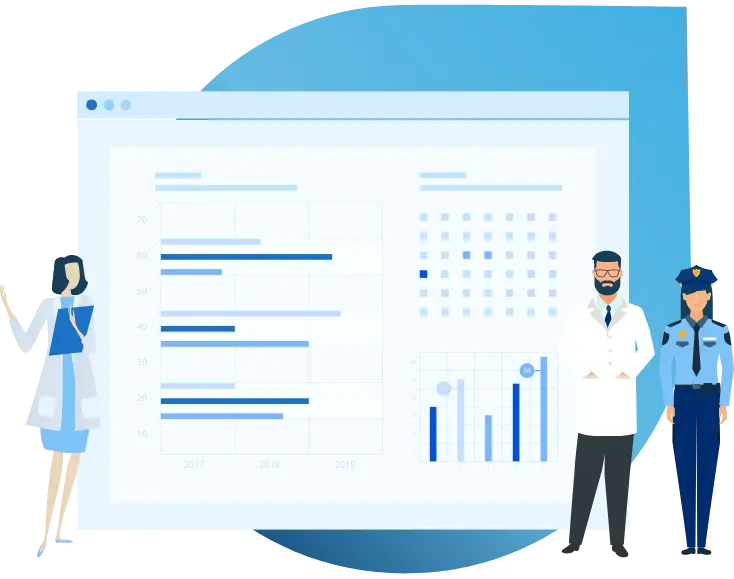
Healthcare and law enforcement professionals sharing data on a secure Julota dashboard

Compliant With HIPAA, 42 CFR Part 2, and CJIS Privacy and Security Requirements

Seamless ePCR Solution Integration

Smooth EHR Integration

Opioid Response FAQs

What is opioid response software?

Opioid response software is a secure, shared platform that lets the agencies responding to the opioid crisis — EMS, fire, law enforcement, behavioral health, treatment providers, peer recovery programs, and social services — coordinate care for people at risk of overdose. It typically handles referrals, post-overdose follow-up, care coordination, consent-based information sharing, and outcome reporting for grants, opioid settlement funds, and policymakers. Julota is opioid response software built for multi-agency community programs.

Julota supports a wide range of opioid response models, including overdose response teams, post-overdose outreach (quick response teams), harm reduction and syringe services programs, medication for opioid use disorder (MOUD/MAT) navigation, EMS and fire co-response, law enforcement diversion programs, peer recovery support services, and mobile integrated health–community paramedicine (MIH-CP) programs.

Julota gives approved partners a secure place to document encounters, submit referrals, assign follow-ups, share updates, and track outcomes. This reduces duplicated work and gives every team visibility into what has already happened with each person.

Yes. Julota can be configured to collect the data your program needs for internal reporting, grant reporting, opioid settlement fund reporting, leadership updates, and community impact reports.

Yes. Many communities fund overdose prevention and response with opioid settlement dollars, and they need to show how that money is being used. Julota can be configured to capture the activities and outcomes your settlement fund plan calls for — such as outreach contacts, treatment referrals, linkage to care, and follow-up — and report them to your board, county, or state.

No. Julota is not designed to replace every system your partners use. It helps connect outreach activity, referrals, follow-up, and outcome tracking across agencies so your team can coordinate more effectively.

Yes. Julota is cloud-based and accessible in the field, allowing outreach teams to document encounters, add notes, manage follow-ups, and capture location-based information when appropriate.

Julota uses secure, role-based and consent-based access, so each partner can view and contribute only the information their role and authorizations allow. Julota is built to support HIPAA, 42 CFR Part 2 (which protects substance use disorder treatment records), and CJIS requirements — essential when opioid response involves healthcare, behavioral health, substance use treatment, social services, and public safety partners.

Yes. Julota supports simple referral workflows so approved community partners can submit referrals without having to learn the full system or add complexity for the broader network.

Spreadsheets and isolated case notes can track activity, but they don’t create a coordinated opioid response network. Julota helps teams manage referrals, services, follow-up, partner communication, and reporting on a single secure platform.

Julota’s opioid response platform typically costs between $5,000 and $45,000 a year. Pricing depends on three factors:

  • The size of the population you serve
  • The number of active clients
  • Which à la carte add-ons you choose

Here's What Our Excellent Clients Say...

Is Your Opioid Response Program Ready to Prove Its Impact?

We would be delighted to show you a demo, put you in touch with current customers, and answer any questions you have. Reach out anytime.