

What MIH-CP Readmission Programs Actually Do
Mobile Integrated Health–Community Paramedicine (MIH-CP) programs deploy community paramedics into patients’ homes for non-emergency visits. In the context of readmission prevention, the workflow typically looks like this: a patient is flagged at discharge, ideally within 24 to 72 hours, as high-risk for readmission. A community paramedic is dispatched to the home, not for an emergency, but for a structured post-discharge visit. They check vitals, review medications, assess the home environment for risks or signs of food insecurity, and communicate their findings to the care team. If something is wrong, they address it before it becomes a 911 call or ER visit.
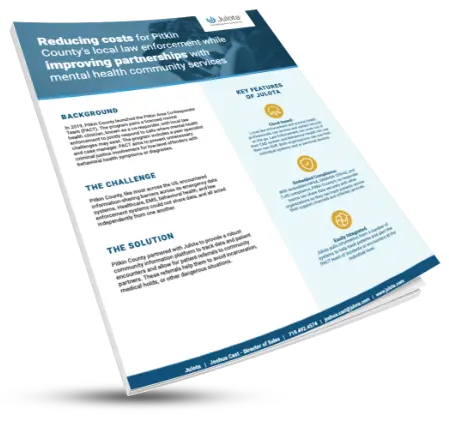
This isn’t a wellness check. It’s a clinical intervention delivered at the point where rural patients are most vulnerable and least supported. A community paramedic can draw labs, perform a 12-lead EKG, connect the patient to telehealth with their primary care provider, and document everything in a shared care record. Platforms like Julota are specifically built for this kind of multi-directional data sharing, enabling community paramedics, hospital discharge teams, FQHC care coordinators, and social workers to stay in the same information loop, even when they work for different organizations and use different systems. In rural settings where care is already fragmented, interoperability is more than a “nice-to-have”; it can be the glue holding your community services together.
The Financial Case
The numbers behind readmissions are not subtle. The national average 30-day all-cause readmission rate is approximately 14.6%, and rural hospitals consistently have higher readmission rates than their urban counterparts. The average cost of a readmission is around $16,300 (roughly 12% more expensive than the original admission). Across the system, preventable readmissions cost an estimated $17 billion annually.
For hospitals, the consequences are direct. Under the Hospital Readmissions Reduction Program (HRRP), CMS penalizes hospitals for excess readmissions for conditions such as heart failure, pneumonia, COPD, hip and knee replacement, and CABG. In fiscal year 2024, 7.5% of hospitals faced penalties of 1% or more of their Medicare reimbursements, a number that falls harder on smaller, rural facilities.
The cost differential between an MIH-CP visit and an ED visit is where the financial argument sharpens. However, it’s worth noting that these figures vary meaningfully by state, and building your case with local numbers will always carry more weight with funders than national averages.
In Colorado, the picture is striking. According to data from the Center for Improving Value in Health Care, which administers the state’s All Payer Claims Database, a moderate-severity ED visit in Colorado costs over $3,000 in allowed facility payments alone, before lab tests, imaging, physician fees, or pharmacy costs are added. Colorado ranks second in the country for average ED charges for moderate-severity visits.
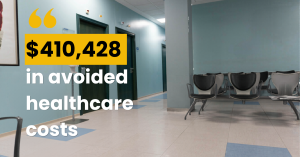
The outcome data on what MIH-CP interventions actually save is increasingly concrete. A prospective cohort study published in the Western Journal of Emergency Medicine followed 78 patients with CHF, AMI, and COPD who received post-discharge community paramedic home visits for 30 days, matched against 78 controls who received standard care. At 210 days, the community paramedicine group had 40.9% fewer total hospital admissions, 40.7% fewer ED visits, and generated $410,428 in avoided healthcare costs across the cohort, roughly $5,300 per patient. Programs in other states should expect variation, but the direction of the finding is consistent with what Colorado and national data both suggest: the intervention costs a fraction of what it prevents.
The ROI math is straightforward: if a program serves 100 high-risk patients post-discharge and prevents even 20 readmissions, the avoided cost to the system runs into the hundreds of thousands of dollars. That’s a compelling number to present to a Medicaid managed care organization or a hospital system looking to reduce its HRRP exposure.
Why FQHCs Are Uniquely Positioned
FQHCs may not suit every MIH-CP partnership, but for rural FQHC readmission prevention programs, they’re often the strongest anchor in the healthcare ecosystem.
Start with the patient population. FQHCs serve patients on a sliding-fee scale, with a disproportionate share of Medicaid beneficiaries, uninsured patients, and individuals with multiple chronic conditions. These are exactly the patients at highest readmission risk: Medicaid patients aged 45–64, with readmission rates approaching 20 per 100 index admissions. FQHCs know these patients. They often have relationships with them that the discharging hospital does not.
Then there’s the data infrastructure. FQHCs are required to report Uniform Data System (UDS) metrics annually to HRSA, which means they already have structured, longitudinal data on their patient population, diagnoses, visit frequency, and social risk factors. That’s a meaningful foundation for identifying which patients should be enrolled in a post-discharge MIH-CP program and for demonstrating outcomes to funders afterward.
FQHCs also have care coordination teams (nurses, social workers, patient navigators) that community paramedics can plug into rather than duplicate. The community paramedic serves as the field arm of an existing care team, rather than a standalone program that has to build clinical infrastructure from scratch. That integration lowers cost and increases the clinical value of each visit.
Finally, FQHCs have grant-writing capacity and federal relationships that rural EMS agencies often lack. The Section 330 grant framework, HRSA’s various supplemental funding mechanisms, and state Medicaid innovation dollars are all more accessible to health centers than to fire departments running community paramedicine programs on shoestring budgets.
Barriers for Implementation
None of this is frictionless, and leaders who have tried to stand up these partnerships will tell you so.
Workforce is the first constraint. Community paramedics require additional training beyond standard paramedic certification, and in rural areas, the paramedic workforce is already stretched. Recruiting for an expanded role in a market where baseline EMS staffing is challenging requires either creative compensation structures or partnerships with EMS agencies that already have MIH capacity or are building it.
Licensure is the second. State-level authorization for community paramedicine varies enormously. Some states have robust enabling legislation and Medicaid reimbursement pathways; others have neither. Before investing in program development, FQHC leaders need to understand the state’s regulatory environment. The Rural Health Information Hub’s community paramedicine overview is a useful starting point for mapping the landscape.
Reimbursement remains the thorniest problem. Despite the clear cost-offset logic, direct reimbursement for MIH-CP services is still inconsistent across payers and states. Most programs currently rely on grant funding, hospital partnerships, or per-member-per-month arrangements with managed care organizations, none of which are guaranteed or sustainable without deliberate relationship-building.
And then the partnership is complex itself. Partnering with an EMS agency for rural FQHC readmission prevention involves two organizations with different cultures, different workflows, different data systems, and potentially different ideas about who is responsible for what. Governance structures, data sharing agreements, and role clarity need to be established before the first community paramedic knocks on a patient’s door.
What to Do in the Next 90 Days
If you’re an FQHC leader who sees the opportunity here, three things are worth doing before the quarter is out.
- Pull your UDS data and identify your highest-risk patients. Are they frequent ED utilizers, patients with two or more chronic conditions, or is it anyone who has been hospitalized in the past six months? That list is your potential program population, and having it ready makes every subsequent conversation with hospital partners or funders more concrete.
- Find out who in your region is already doing MIH-CP work. Many rural EMS agencies have a community paramedicine program at some stage of development, even if it’s informal. An FQHC can often accelerate and strengthen an existing program rather than building from scratch, which is faster, cheaper, and more likely to succeed.
- Talk to your regional hospital’s CFO or VP of quality. They are almost certainly tracking their HRRP penalty exposure and looking for partners to help reduce it. An FQHC that can offer a care coordination bridge is bringing something the hospital needs and cannot easily build on its own. That’s a partnership conversation, not a grant conversation, and it tends to move faster.
The shift toward value-based care isn’t coming to rural health, it’s already here. It may be unevenly distributed and imperfectly implemented, but the direction is clear. FQHCs that position themselves now as the anchor of community-based, post-acute care coordination won’t just be better for rural FQHC readmission prevention. They’ll become indispensable to the payment models reshaping rural healthcare from the outside in. For more insights on how rural health leaders can prepare for this shift, explore Julota’s RHTP Hub.