People with mental health emergencies can easily be overlooked. But that’s changing. Through partnerships between community paramedicine and behavioral health professionals, those with a psychological or behavioral crisis get faster care, fewer negative interactions with police officers (and fewer arrests), closer attention to their medical needs, and reliable follow-up care.
Below, we’ll provide a detailed review of why co-response teams are so critical and how they operate in different areas around the country.
How Do Community Paramedics Improve Co-Response for Mental Health Crises?
Community paramedics improve co-response for mental health crises by giving behavioral health clinicians broader reach and better care options: faster immediate care for someone in a psychological crisis, fewer negative interactions with police and fewer arrests, follow-up visits that reduce isolation, and closer attention to the medical problems that often sit underneath a behavioral one. The pairing produces better outcomes in the communities that have tried it.
Key Takeaways
- People with mental health emergencies are easy to overlook, and co-response with paramedics changes that.
- Faster care and fewer arrests are the two immediate effects.
- Follow-up visits are what reduce isolation and repeat crises.
- Medical attention during a behavioral crisis catches what a clinician alone might miss.
How Do Community Paramedics in Co-Response Improve Behavioral Health Care?
When it comes to behavioral health incidents, there’s a lot that can go wrong. One of the first things to overcome is the belief that a behavioral health event is always related to criminal behavior. This belief can lead to some unfortunate situations.
For example, someone who has severe low blood sugar levels (hypoglycemia) may behave erratically at times. While responders and healthcare professionals must always use caution around dangerous behavior, if this low blood sugar patient were mistaken to be someone acting criminally (and restrained and taken to jail), that would be a real tragedy, and a failure of both healthcare and law enforcement.
While this is an extreme example, more subtle versions of this incident occur more often than many might realize. The goal of co-responder teams, and partnerships between paramedics and psychiatric professionals, is to ensure that people experiencing a behavioral emergency receive the same level of attention and care as would any other medical emergency.
This is not to say that there are no nuances in how someone having a mental health crisis should be treated. There certainly are. We’ll address these nuances, and much more, in the next sections.
Here’s how Co-Response Teams impact the community:
- Improving Immediate Care for People in a Psychological or Behavioral Crisis
- Reducing Negative Interactions with Police Officers and Law Enforcement
- Reducing the Number of Behavioral Health Interactions that End in Arrest
- Providing Follow-up Visits and Reducing Isolation
- Paving the Way for Improved Medical Care for Behavioral Health Patients
Below, we’ll have a closer look at the details of these methods and results.
How Do Community Paramedics Improve Immediate Care in a Behavioral Crisis?
Depending on the nature of the mental health crisis, sometimes these patients don’t receive the same priority of care as someone else. For example, you might have someone who has called 911 due to suicidal ideation.
While this will certainly get a response, in some areas it may be given lower priority, and it could take a while before the patient sees a behavioral health professional for evaluation.
With the co-responder model, the patient can receive care much faster. Instead of waiting until they are evaluated by the ambulance and then transferred to the ER, they have someone with mental health training responding directly to them.
This can be significant. In some patients, assessing their environment and questioning them before they arrive at the hospital can result in valuable insight into their condition. Not only that, but when a community emphasizes early response to mental health emergencies, law enforcement, fire, and EMS are better able to recognize and triage patients suitable for a co-responder intervention.
Speaking of law enforcement, let’s talk about reducing negative interactions.
Reducing Negative Interactions with Police Officers and Law Enforcement
Sadly, there have been some high-profile incidents of negative interactions between people and law enforcement. It’s no secret that, regardless of the situation, when a law enforcement officer in full uniform walks onto a scene (be it a medical scene, mental health crisis, or potential crime), people can become more anxious than they were previously.
While there is some variance in opinion on how much anxiety can be caused by the presence of law enforcement, no one denies its presence. The next question is this: Should somebody who is having a mental health crisis have their anxiety raised by the presence of a police officer? The answer seems to be (unless there is a clear and present danger), probably not.
With a co-responder program, a police officer may be present, but they will often be in non-descript clothing and working in a medical-first capacity. In other cases, the police officer will respond to the area but remain off the scene unless there is a clear danger.
When this is the response methodology, community paramedics in co-response will make first contact with the patient alongside the behavioral health clinician.
From there, the team will work on de-escalation and evaluation. In the best-case scenario, the patient will not require PD intervention and will receive a professional evaluation from the behavioral health clinician.
Co-Responder Teams: Reducing the Number of Behavioral Health Interactions that End in Arrest
Reducing negative interactions with the police has two main impacts: First, it builds trust between the community and law enforcement. Second, it reduces the number of people who have an incident ending in arrest.
It’s no secret that when someone is arrested, their life takes quite a turn. While some arrests may be unavoidable, part of the co-responder mission is to take those incidents teetering on the edge and steer them away from arrest.
The positive benefits of avoiding arrest are hard to deny. Now, the patient is being steered away from the criminal justice pathway and toward the healthcare pathway. The hope is that this will lead to better management of their condition and more lasting freedom.
How Do Follow-Up Visits Reduce Isolation for Patients With Mental Health Conditions?
One of the next things that can make a big difference for people is providing follow-up visits. The follow-up visit is all about making sure that people have support in the critical days after they’ve had a mental health crisis.
One common complaint about healthcare in general is the lack of support for people once they leave the hospital. In many cases, patients and their family members don’t feel adequately prepared to handle long-term care after a critical event.
Furthermore, many patients want a network of providers they can reliably reach if they have any questions about their care.
When it comes to implementing these follow-up programs, there are a few goals co-responder teams aim to achieve. First, they try to ensure that the follow-up is voluntary. This means that the patient has actively agreed to and understood the benefits of the follow-up visit.
While there are cases in which involuntary follow-up may be necessary, this is rare; the goal is to give the patient agency in improving their long-term health.
Second, these follow-up visits typically occur around three days after the initial event, but they may occur on the day of discharge from a facility or even repeatedly for several weeks. During these follow-up visits, the co-responders are trying to accomplish several things.
The most important thing is to ensure the patient feels they understand their treatment plan and knows who to call if something goes wrong. They are also trying to make sure that their environment is safe, that they have stable essentials (clean water, food, shelter, etc.), and that they don’t have any lingering medical issues that may be complicating their mental health.
We’ve discussed the behavioral health side of things – now let’s have a look at the medical.
Paving the Way for Improved Medical Care for Behavioral Health Patients
Whenever treating someone with a mental health crisis, it’s important to remember the medical side of things and to work from there. Going back to the beginning of this article, consider someone with hypoglycemia. This person may have profound mental status changes; however, they must have the medical side evaluated before moving toward their psychological health.
This is true of many other conditions. People with urinary tract infections can have profound behavioral health changes, as can someone with a head injury or a drug overdose. All these conditions are the reason why community paramedics in co-response settings can make a big difference — they clear the patient medically before behavioral health clinicians make their evaluation.
Upon arrival at the scene of a mental health crisis, the paramedic can work to clear the patient from a medical standpoint before the behavioral health clinicians make their evaluation.
This model places greater emphasis on the patient’s physical health.
Conclusion: Community Paramedics in Co-Response Drive Better Outcomes
Co-responder teams made up of community paramedics and mental health professionals can have a direct impact on a patient’s life. These teams can reduce negative interactions with the police, decrease the chances of arrest, and improve long-term care for the patient.
However, all of these things are only possible with a united team of community providers.
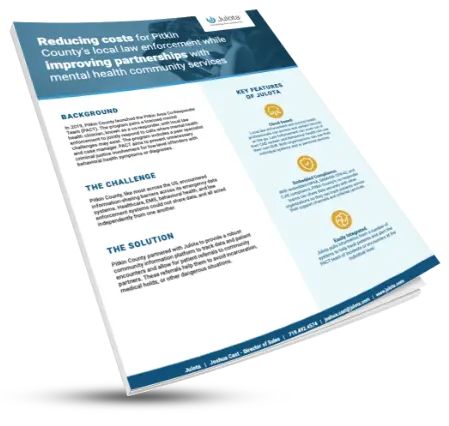
Contact Julota for more details on how their software tools can help your co-responder team collect and manage data more effectively. A member of the team would be happy to listen to your needs and offer a hassle-free demonstration.
Related reading
- Rural Behavioral Health Teams: Built to Serve, Struggling to Survive
- Resilience Strategies for Frontline Behavioral Health Workers: Finding Strength in a Flawed System
- Integration of Telemedicine and Community Paramedicine in 911 Response