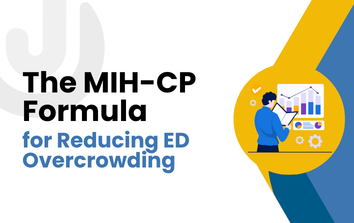
Why do EDs get overcrowded in the first place? Before we talk solutions, it helps to understand the problem. ED overcrowding doesn’t have a single cause; rather, it’s a web of interconnected issues that vary from community to community.
In some areas, it comes down to staffing. Hospitals simply don’t have enough nurses, physicians, or support staff to handle patient volume efficiently. In others, it’s a matter of geography. Rural communities may have only one hospital within a 50-mile radius, making the ER the default option for everything from broken bones to sore throats.
Then there’s the issue of access. For many underserved populations, the emergency room is the only option they’ve ever known. Without a primary care physician, without insurance, or without reliable transportation to a clinic, people show up at the ER for conditions that could easily be handled elsewhere. That drives up wait times, drains resources, and makes it harder for staff to focus on true emergencies.
MIH-CP doesn’t try to slap a band-aid on any of this. Instead, these teams take a data-driven, community-focused approach, identifying the specific causes of overcrowding in their area and addressing them head-on. That’s what makes MIH-CP so powerful: it’s adaptable.
So how exactly does MIH-CP work, and why is it making such a difference? The following strategies illustrate how:
1. Reverse Triage for 911 Callers
Most people are familiar with triage, the process of assessing patients and prioritizing the most critical cases first. Reverse triage flips that concept on its head. Instead of upgrading a patient’s priority, reverse triage is about identifying patients whose conditions don’t require emergency care and safely redirecting them to a more appropriate setting. This could mean sending someone to an urgent care clinic, scheduling a follow-up with a primary care physician, or even simply reassuring a patient that their symptoms don’t warrant an ER visit.
Here’s a real-world example: Imagine a 45-year-old calls 911 because they’ve had a persistent cough and runny nose for three days and can’t sleep. They’re worried, but they’re not in danger. A trained MIH-CP paramedic can respond to the call, conduct a thorough assessment, checking vital signs, oxygen saturation, lung sounds, and confidently determine that the patient does not need emergency care. Instead of transporting them to an already-busy ER, the paramedic can connect them with an urgent care clinic or telehealth provider.
The benefits are twofold: the patient gets appropriate care faster, and the ER keeps its resources available for patients who truly need them. Over time, this also helps educate the public about when the ER is and isn’t the right choice, which has a compounding positive effect on overcrowding.
2. Using ED Data to Connect Patients to Primary Care
Data is one of the most powerful tools in the MIH-CP arsenal. By reviewing patient history and ED visit patterns, MIH-CP teams can identify individuals who are cycling through the emergency room for conditions that would be far better managed through primary care or specialty services.
Take someone who has visited the ER four times in the past three months for uncontrolled high blood pressure. Each visit is expensive, time-consuming, and ultimately doesn’t solve the underlying problem. An MIH-CP team can flag this pattern, reach out to the patient, and help connect them with a primary care physician who can develop a proper long-term management plan.
The same applies to patients dealing with chronic conditions like diabetes, asthma, or heart disease. These are conditions that require ongoing management — not emergency intervention. When MIH-CP teams step in and bridge the gap between the ER and primary care, the outcomes improve across the board. Patients get better, more consistent care. Hospitals free up critical resources. And the community as a whole becomes healthier.
Education plays a huge role here too. Many patients simply don’t know that better options exist. Part of the MIH-CP mission is changing that, helping people understand their healthcare options and empowering them to use the right resources at the right time.
3. Setting Up Mobile Clinics in the Community
Sometimes the best way to reduce pressure on an ED is to bring care directly to the people who need it. That’s exactly what MIH-CP mobile clinics do. A mobile clinic can look different depending on the community’s needs. In some areas, it might be a van staffed with a nurse practitioner offering health screenings, flu shots, and blood pressure checks. In others, it could be a fully equipped unit with advanced providers who can triage patients, administer medications, and issue specialist referrals — all without setting foot in an ER.
Mobile clinics are especially effective in underserved neighborhoods where access to care is limited. During the COVID-19 pandemic, many MIH-CP programs deployed mobile units directly outside hospital entrances to screen patients before they entered, reducing infection risks and controlling patient flow simultaneously.
In communities dealing with a spike in overdoses, a mobile clinic might offer Narcan training, addiction counseling referrals, and harm reduction education. The goal is always the same: meet people where they are, provide the care they need, and reduce unnecessary ER visits in the process.
4. Targeted Follow-Up Programs for High-Frequency Patients
One of the most impactful things an MIH-CP team can do is follow up with patients after an ER visit, particularly those who come back again and again.
Think about someone who has been to the ER six times in two months for complications related to substance use. Each visit gets them through the immediate crisis, but nothing changes long-term. They’re caught in a cycle that’s costly for the hospital and dangerous for them.
MIH-CP teams can break that cycle. By identifying high-frequency patients, reaching out after a visit, and actively connecting them with rehabilitation programs, mental health services, or chronic disease management resources, these teams address the root cause, not just the symptom.
Follow-up programs aren’t limited to addiction, either. They’re equally effective for patients managing mental health conditions, recovering from serious injuries, or dealing with chronic illnesses like COPD or congestive heart failure. The consistent, personalized attention that MIH-CP provides is something the ER simply isn’t designed to offer and that’s exactly what makes it so valuable.
5. Coordinating with ER Staff During Patient Surges
Even the best-managed emergency departments can be caught off guard by a sudden surge in patients. Whether it’s flu season, a local outbreak, or a mass casualty event, surges can overwhelm an ER in a matter of hours.
MIH-CP teams can serve as a critical safety net during these moments. When a surge is detected, or even anticipated, MIH-CP units can mobilize quickly to support the ER in several ways. They can set up a mobile triage station outside the hospital to handle lower-acuity patients. They can redirect non-emergency 911 calls to urgent care facilities or telehealth providers. And for patients with minor conditions, they can treat them on-site at home, eliminating the need for transport entirely.
This kind of coordinated response doesn’t just protect the ER during a crisis, it protects the entire community. When hospitals have a reliable partner in MIH-CP, their capacity to handle true emergencies improves dramatically.
The Role of Trust in Making MIH-CP Work
One underappreciated factor in MIH-CP’s effectiveness is trust.
For MIH-CP Solutions Reducing Emergency Department Visits programs to work, trust has to come first. Patients need to feel confident that when a paramedic tells them, “You don’t need the ER tonight,” they’re receiving sound, reliable guidance, not simply being turned away. That kind of confidence isn’t built overnight. It develops gradually, through care that is consistently compassionate, consistently competent, and consistently present in the communities it serves.
It’s also built through transparency. MIH-CP teams that share data with hospitals, track outcomes, and continuously improve their protocols are the ones that earn the confidence of both patients and healthcare partners. Tools that support seamless communication and data sharing between MIH-CP teams and hospital systems are essential to making this happen.
MIH-CP Solutions Reducing Emergency Department Visits: The Bottom Line
ED overcrowding is a serious problem, but it is one that communities are already solving. Where MIH-CP programs have taken root, hospitals are seeing measurable relief: fewer unnecessary visits, better outcomes for high-frequency patients, and a system that can finally focus its resources where they matter most. The strategies are proven; what determines success is having the right partnerships, data infrastructure, and community trust to put them into practice. If your organization is ready to take that step,
Julota’s software is built to support every stage of the process; from coordinating MIH-CP teams in the field to enabling seamless data sharing with hospital partners. Reach out today to learn what’s possible in your community.