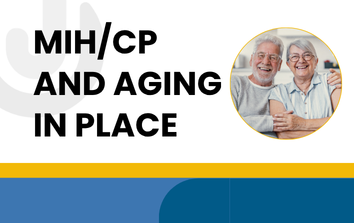
Aging in place refers to older adults who choose to stay in their homes instead of moving to a full-time assisted living facility. There are many reasons why this is becoming more popular: sometimes there isn’t enough space at a facility, sometimes older adults can’t afford it, and other times people simply prefer to stay in their homes.
Regardless of the reason, Mobile Integrated Health-Community Paramedic (MIH-CP) teams can play a pivotal role in building a safe, sustainable aging in place program.
How Mobile Integrated Healthcare Helps Older Adults Thrive at Home
Before discussing how MIH teams help older adults at home, we should first ask: Why would anyone choose to stay at home when they could have 24-hour care in a live-in facility?
This is a good question, one that has received a lot of attention. We don’t have the space in this article to cover everything, but there are a few key reasons why the aging in place consultant exists. Generally, there are two main points on which the decision to Age in Place depends.
First, for some older adults, moving to a long-term assisted living community simply isn’t an option. It could be that they live in an especially rural area, or that they reside in an urban area where demand for assisted living is high. Additionally, there are cases where it might not be financially feasible.
Second, many older adults prefer to stay in their homes. While this might be a personal choice, research shows that there are benefits for some seniors who choose to remain at home during their later years. Of course, this isn’t true for everyone, but some older adults who stay at home experience better memory, improved moods, and fewer health issues.
Regardless of the reason, aging in place gracefully still requires a strong healthcare system behind it. Increasingly, communities recognize that MIH-CP teams are the ideal way to help people stay in their own homes. Let’s talk about it.
Here are the ways that MIH-CP supports aging in place:
- Using home visits as the foundation to help older adults remain independent
- Assisting with the person’s environment (making it safe)
- Providing medication reconciliation services
- Offering procedures at home
- MIH teams create a strong connection between the older adult at home and the physician
- Building a wider (more coordinated) network of professionals who can assist the aging in place
Now let’s jump into all the details.
Mobile Integrated Health Community Paramedicine Uses Home Visits as the Foundation for Aging in Place
When you review an aging in place safety checklist, you’ll notice that almost everything requires in-person inspection of the person’s home. While providers can administer this assessment to someone in the doctor’s office, it’s much more effective to conduct a home visit.
As we will discuss, the home visit is the foundation for a successful aging in place consultant. Whenever people consider moving to an assisted living facility, one of their main reasons for doing so is often that their home environment has become less suitable.
When a community paramedic collaborates with a healthcare team to improve someone’s home for healthy aging, they are much more likely to feel safe and confident in their environment. The major advantage that MIH-CP teams have over nearly any other healthcare professional is their ability to visit a person’s home, assess it, and develop a plan to enhance safety.
Mobile Integrated Health Community Paramedicine Assists Aging in Place by Performing an Environmental Assessment
The environmental assessment is essential for a successful Aging at Home program. Consider this: what are some key differences between a hospital bathroom and a typical home bathroom? Hospital bathrooms typically have rails on the walls, pull cords near ground level in case someone falls, easily accessible showers, non-slip floors, and no dangerous rugs.
These same changes can be made to someone’s home, and they aren’t as expensive or as difficult to make as some people may think.
When a community paramedic takes on a new patient as an aging in place consultant, conducting an environmental assessment is one of the initial steps. When aiming to help someone improve their life, starting with the environment is almost always essential.
For those trying to improve their eating habits, removing unhealthy foods from the house is the first step. For those aiming to increase their daily steps, installing a walking pad can be helpful.
The same applies to older adults who want to age safely at home. If their house has tripping hazards, these should be removed. If they don’t have proper rails on the stairs, these should be installed.
But environmental assessments go beyond just checking for common trip hazards. Community paramedics also look for things we might take for granted: does the patient have reliable air conditioning in the summer and heat in the winter? Does their house have any structural problems or mold? Do they have enough food in the fridge? Do they have a phone that’s easy to access and use?
All these elements contribute to a safe environment. A good MIH-CP team considers the whole patient picture, not just the obvious parts.
Mobile Integrated Health Community Paramedicine Promotes Aging in Place through Medication Reconciliation and Management
Another way community paramedicine helps older adults stay in their homes is by managing their medications. Medication reconciliation is essential for safety when patients handle multiple prescriptions.
The community paramedic dedicates time to sort, record, and organize a person’s medications. This involves thoroughly reviewing the medications the patient may be taking—including old prescriptions, over-the-counter drugs, family medications, and off-label uses—and trying to match them with their current prescriptions.
The goal is to prevent patients from getting incorrect or incompatible medications and to provide the doctor with a clearer overall health picture of the person.
Mobile Integrated Health Community Paramedicine Assists Aging in Place via Advanced Home Medical Procedures
Community paramedics can help deliver some of the professional facility’s resources directly to the patient in their home. For example, for someone aging in place, an MIH-CP team can visit the home to perform comprehensive physical exams, blood draws for lab analysis, and provide IV medication administration if necessary. The ability to provide some of these treatments at home helps reduce the gap caused by distant clinics.
MIH-CP Supports Aging at Home by Creating a Connection between Physician and Patient
Not only can MIH-CP teams assist seniors aging in place by providing advanced health procedures at home, but they can also foster a more direct connection between individuals and their doctors.
One of the simplest ways MIH-CP teams achieve this is by giving physicians detailed reports on how the patient appeared during weekly assessments. Additionally, MIH-CP teams can enable direct video call communication between doctors and patients, effectively bringing the provider into the home virtually.
Community Paramedicine Enhances Aging at Home by Increasing the Network of Providers
Finally, one of the most important actions a community paramedic can take for an aging adult is to establish a strong network of providers. Community paramedicine programs achieve this by using documentation and data collection platforms that are secure, customizable, and easily interoperable.
For a simple example, consider an interoperable platform as a single messaging group where everyone authorized to provide care to the patient can view the health record and make fully informed decisions.
The Key Methods That Community Paramedicine Uses to Contribute to Aging in Place Programs
An aging in place consultant can improve the quality of life for older adults by keeping them in a comfortable, familiar, and safe place. Community Paramedicine-Mobile Integrated Healthcare plays a key role in accomplishing the safety aspect of aging in place. For more information on how to implement an MIH-CP program in elder care, CLICK HERE.
MIH-CP teams accomplish this by performing home visits, checking in on the patients’ meds, providing advanced medical procedures, and connecting the person with their physician. The goal is a healthier, happier community that can feel comfortable as they age in the homes they love.
Contact Julota to learn more about how their advanced software and services can improve your MIH-CP program’s ability to help people age in place.