
Here’s why some community paramedicine programs are incorporating Suboxone into their treatment. First, suboxone offers a pathway for recovery where naloxone can antagonize a person who is trying to recover. Second, community paramedics can provide support for those working to recover from substance abuse. Finally, integrating ideas like suboxone facilitates a comprehensive approach to helping those with severe addictions.
How Suboxone Treatment Into Community Paramedicine Supports Recovery
In the past, those who were seeking help from addiction were told that the only way to achieve freedom was a hard break from their substance use. The results were mixed. While some people have been able to break from dangerous drug use with no medical assistance, a large number of people have struggled.
Modern addiction treatment seeks to view substance abuse disorders as a medical problem, not one of a personal lack of willpower. The result is that more and more medications have been developed to assist with the transition from severe substance use to being free from drug dependence.
In the following sections, we’ll discuss the specific benefits of Suboxone, particularly how suboxone works when used by Mobile Integrated Health-Community Paramedic teams (MIH-CP).
Here’s how we will cover suboxone and MIH-CP:
- The potential downsides of Narcan vs. Suboxone
- Bringing the Benefits of Suboxone to the Person for Consistency and Accountability
- The Ability for the Community Paramedic to Assess Other Ailments
- The Opportunity to Address Mental Health Concerns
- MIH-CP Can Educate People and Direct Them to Other Resources
- Improving Community Action (Instead of Just Awareness)
Note: While this article explores the benefits of Suboxone, it’s essential to acknowledge that every medication has its pros and cons. Not only that, but how the provider administers the suboxone makes a big difference.
This is also true for naloxone (Narcan). Though we will often talk about the benefits of suboxone over Narcan, this is not to say that Narcan is a harmful drug or that it hasn’t had widely positive effects. We are simply explaining the benefits of suboxone when administered by professional, experienced hands.
Potential Downsides of Narcan vs. Suboxone
To lay the foundation for why suboxone and community paramedicine can be a powerful combination, we need to explain what suboxone is and how it differs from Narcan/Naloxone.
Suboxone combines two medications: an opioid partial agonist, Buprenorphine, and Naloxone, which is an opioid antagonist.
The idea with suboxone is that it’s almost a middle ground between an opiate (like Morphine) and an antagonist (essentially the opposite) like Naloxone. In this way, you could think of suboxone like an off-ramp for those struggling with addiction.
Naloxone, the medication typically given to those who are struggling with addiction, has been very useful in emergency cases, but it has some downsides. First, when naloxone is given to someone who is addicted to opiates, the result can sometimes be severe.
By this, we mean that the patient can experience severe side effects, including nausea, profuse sweating, severe pain, and even behavioral changes. There are even many reports of these patients becoming violent after Narcan is administered, resulting in dangerous encounters with police, first responders, and potential injuries for the patient.
Second, there’s a longer-term (and perhaps more insidious) downside to these things. When people have such a negative and even painful experience from Narcan, not only are they less likely to want to seek help in the future, but they can also have more trouble finding freedom from the substance.
With all this said, it’s also essential to offer some nuance. This isn’t to say that Narcan is bad – just that it can be misused and is not a perfect drug. No drug is. However, in the hands of careful responders, both suboxone and Narcan can be used to help people survive the crisis of addiction.
Community Paramedics can bring the Benefits of Suboxone to People in Recovery.
What are the benefits of Suboxone for community paramedics? Well, think of suboxone as a drug that can be administered when the patient is dealing with moderate symptoms of opiate use. This could be someone who regularly uses opiates and would like to begin the process of seeking treatment, but they don’t need the drastic reversal effects of Narcan.
Where Narcan would be used when a patient has reached the emergency phase (their breathing has stopped or dangerously slowed), suboxone can help to diminish the impact of a dangerous withdrawal.
Suboxone works by trying to stabilize a person who struggles with opiate addiction. On the one hand, suboxone will provide some of the effects of something like morphine, but its effects are much less likely to lead to dangerous side effects.
One thing to keep in mind is that suboxone is not a miracle drug. While it can be beneficial, consider it a bridge that can lead people to definitive care.
The Ability of the Community Paramedic to Assess for Other Ailments
An addiction rarely happens in a vacuum. Often, other factors are also at play. Let’s discuss a few of them and then explore how community paramedics can assist.
First, community paramedicine can utilize medications like Suboxone to help stabilize individuals and address necessary social concerns. The fact of the matter is, very few people are going to seek absolute freedom from addiction if they don’t have at least some form of stability in their lives.
If a person doesn’t have stable housing, is unable to eat good food (or doesn’t have regular meals), or has a challenging family situation. They are unlikely to be able to find the strength to overcome a serious addiction.
When a community paramedic encounters someone with a challenging living situation, they may refer that person to a social worker who can help them establish a stable foundation for proper recovery.
Second, just like social issues, people will have more difficulty overcoming addictions if they are dealing with severe physical pain. It could be that the person had an injury, and they became dependent on strong pain meds to cope. If this is the case, the community paramedic can explore alternative pathways for treating pain, including addressing the underlying cause.
Finally, psychological issues and mental health disorders can be a huge factor when it comes to substance use disorder. In such cases, the community paramedic can help the person find the necessary assistance. Let’s talk about this in more detail.
Suboxone can allow Community Paramedics to Address Mental Health Concerns
The rising awareness of mental health struggles has led to significant changes in the out-of-hospital environment. Ambulance services, fire departments, and law enforcement agencies are revising their policies and practices regarding mental healthcare.
Part of this effort includes ensuring that those who are struggling with substance abuse aren’t just treated for the drug use, they are also treated for any potential psychological conditions, including depression, anxiety, and ailments such as bipolar disorder or schizophrenia.
Increasingly, people are realizing that one treatment cannot be effective without the other. Trying to help someone who struggles with severe mental health disorders will be nearly impossible if they don’t receive help for an addiction.
But wait, how can a community paramedicine program be so many things at once? Let’s talk about it.
Suboxone and Community Paramedicine: MIH-CP Can Educate People and Direct Them to Other Resources
Community paramedics are highly trained professionals who can assist with a wide range of health issues and concerns. However, they are not professionals in all fields. So how can they help people in so many ways?
The answer is simple when you think about it: communication and coordination. Unlike many areas of medicine, which don’t try to break out of their prospective silos, community paramedicine has stepped up to almost acting as a person’s healthcare “manager.” This does not mean that they make decisions on behalf of the patient.
Let’s give a quick and obvious example. If a community paramedic responds to someone they suspect has a mental health disorder, they won’t just give the person a pamphlet with phone numbers to call; they will actually make the call for that patient.
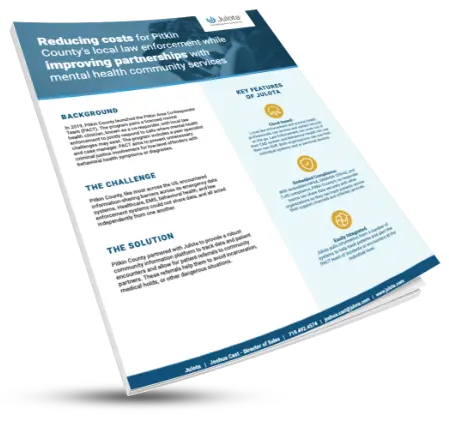
Community paramedicine programs achieve this by utilizing platforms like Julota, which serve as a secure platform for collaboration across various healthcare services.
Conclusion: How MIH-CP Programs Can Integrate Suboxone Treatment Into Community Paramedicine
When used carefully by community paramedics, Suboxone has the power to help facilitate recovery from drug addiction. Suboxone has less drastic effects when compared to Narcan. Not only that, but suboxone can be a pathway to other treatments that are critical to addiction recovery, such as pain management and mental health.
Contact Julota for the inside scoop on how their software tools can help your community paramedic programs better implement addiction outreach programs.