
It’s easy to look at emergency services from the outside and imagine a seamless, “perfect” triage system where every person gets exactly what they need the moment they call. In a perfect world, we would route every crisis flawlessly through:
-
911 Dispatch: For immediate life-safety and medical emergencies.
-
988 Suicide & Crisis Lifeline: For specialized behavioral health support.
-
Mobile Integrated Healthcare (MIH) Teams: For non-emergency medical navigation.
-
Co-Responder Units: Pairing clinicians with law enforcement for on-scene mental health de-escalation.
-
Alternative Response Teams: Sending the right specialized resource instead of a traditional fire engine or police cruiser.
While public education campaigns, like those from CSFD, rightly aim to teach citizens when not to call 911, we must acknowledge that 911 will always remain at the forefront of crisis triage. In the heat of a crisis, families reach for the most memorable number, and callers may lack clarity to distinguish between a medical emergency, a mental health episode, or a disturbance. Because 911 is the number most people know, the solution isn’t just telling people where not to go; it’s about making the interoperability between 911 and specialized services like 988 entirely frictionless.
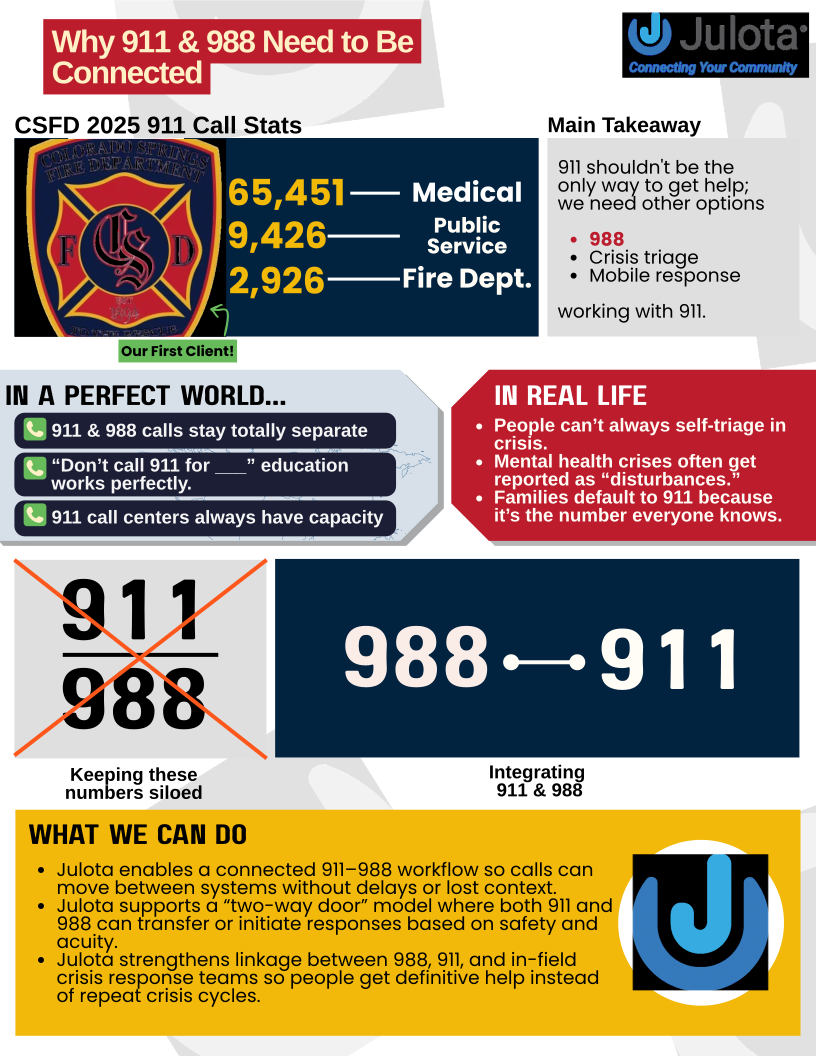
This is where Julota’s role becomes critical: by creating a two-way, interoperable bridge, we ensure that no matter which door a person enters, they are seamlessly and instantly navigated to the right care without the burden of the system’s “myriad of reasons” falling on the individual in need. You can check out this article on integrating 911 and 988 for a more in-depth look.
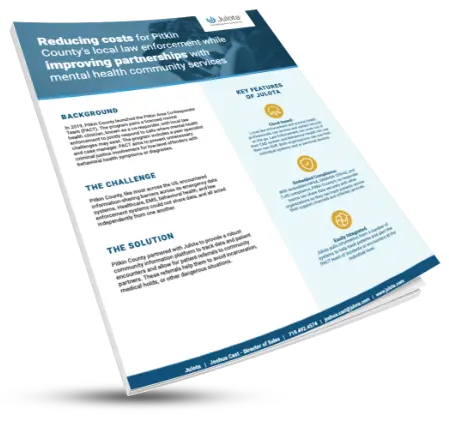
To download a PDF of the infographic please complete the survey below.