David A. Porter, MA, LADC
Note: All decisions must be made in accordance with departmental policy, medical protocol, and jurisdictional requirements. This article is for educational purposes only.

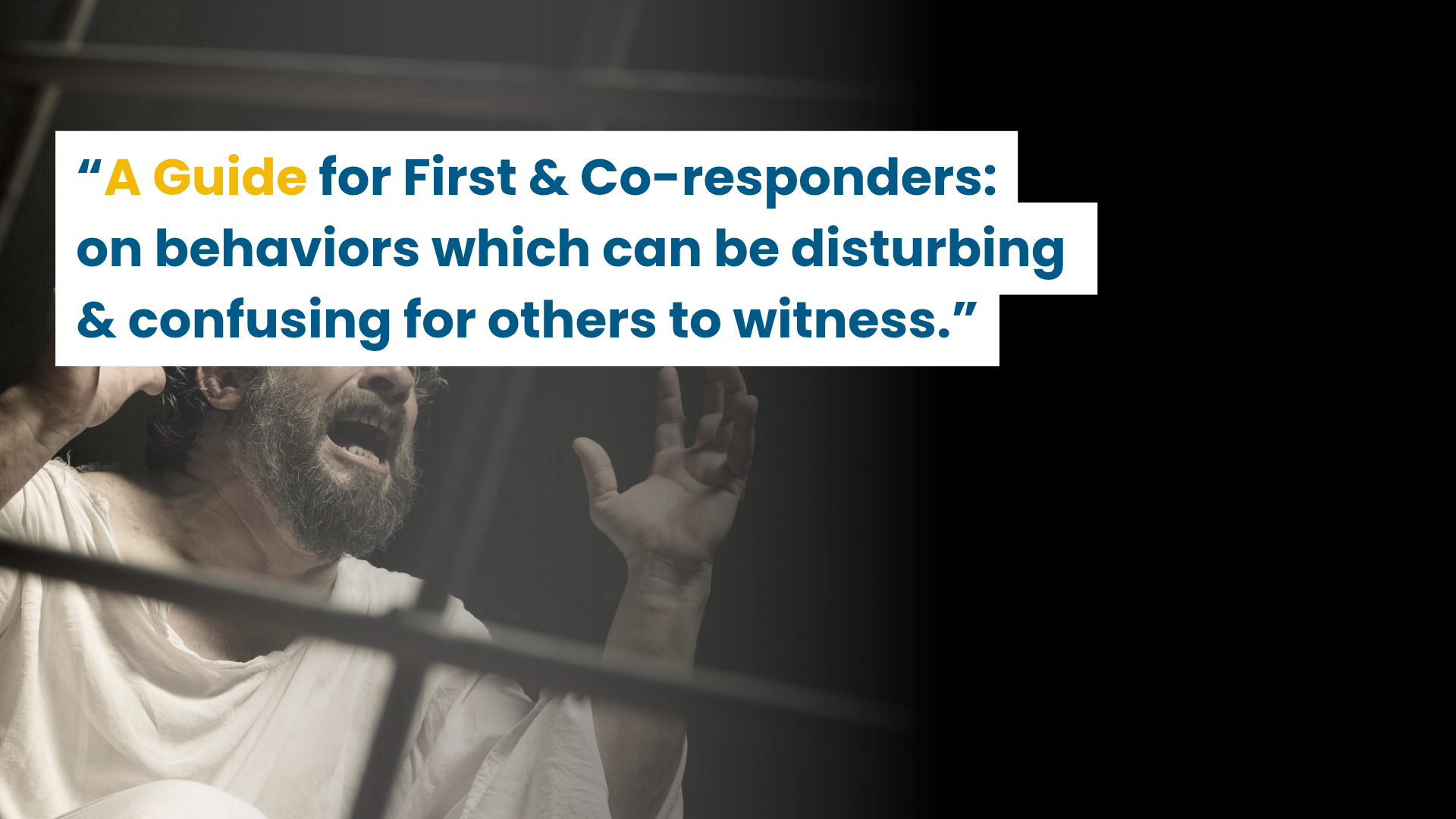
The purpose of this paper is to provide first responders and co-responders with a reference point as to what they are dealing with in the field. I will also dispel common myths about these disorders. This is not about learning to diagnose or treat mental illness, but to recognize what is going on.
Here are some common mental illnesses that 1st responders and co-responders are likely to encounter and that will influence decision-making regarding disposition to criminal arrest, pre-arrest diversion, or court diversion.
- Schizophrenia
- Bipolar
- PTSD
- Major Depressive Disorder
- Panic Disorder

Schizophrenia has nothing to do with multiple personalities
Schizophrenia is a chronic and disabling mental illness. The people who are stricken with it did not ask for it. It has a strong genetic component. It causes hallucinations, typically auditory and sometimes visual. People who have it tend to neglect personal hygiene, and will have bizarre speech and mannerisms, and may respond to the hallucination they are experiencing in real time. They may be paranoid and have delusions, or ideas that are improbable and defy logic. They have lost the ability to discriminate between what is real and what is a product of their own broken minds. Symptoms wax and wane from day to day, and some days may be better than others.
Schizophrenia has absolutely nothing to do with multiple personalities. That is a very different and very rare disorder that the average clinician may encounter only several times over the course of their career. In 29 years of direct patient care and clinical work, I have seen two confirmed cases and two probable cases.
Most people with schizophrenia are never violent. Research does show a modestly higher risk of violence, but much of that excess risk is driven by co-occurring substance abuse rather than the illness itself. When a schizophrenic acts out violently, they are the exception, not the norm. The media, in its relentless pursuit of drama at the expense of reality, will present its violence as the norm. This alarms people. It can leave LEOs (Law Enforcement Officers) and COs (Corrections Officers) uncertain about how to respond and may lead them to use more force than necessary if they are non-compliant. Untreated schizophrenics living on the street are vulnerable. According to one study, people with severe mental illness experience nearly 14 times more personal crime incidents than the general population.
A critical takeaway:
Schizophrenia can be well managed with antipsychotic meds, but they must be taken every day. Missing even one dose can cause some people to decompensate or begin experiencing a psychological breakdown.
Bipolar disorder has nothing to do with mood swings
Bipolar disorder, formerly known as manic-depression, is another chronic, disabling disorder that you are born with and did not ask for. Bipolar disorder has nothing to do with rapid mood swings. Our emotions and feelings are fluid and dynamic, an unreliable reflection of reality and temporary (which I am very glad of, as I have had some awful ones). They come and go, wax and wane, and we move on. Some people have rapid mood changes, due to acute stress, which is called a labile mood.
Bipolar disorder is very different. It is manifested as typically months of a severe, black pit of despair and hopelessness, which alternates with periods of grandiose ideas, ecstatic, euphoric joy, or blind rage. Then back again. While some people with bipolar disorder may cycle rapidly, in days or weeks, months are the norm.
Someone in a manic state will be difficult to reason with. They will speak rapidly, but their ideas will be dramatic and senseless. They may feel grandiose, invincible, unstoppable, bulletproof, superstrong, and like a genius. They can be a threat to themselves or others. Their symptoms can be mistaken for someone under the influence of methamphetamine or PCP.
Critical takeaway:
Bipolar disorder can be well managed with mood stabilizers such as lithium, and sometimes antipsychotic meds, but they must be taken every day. Missing even one dose can cause some people to decompensate or begin experiencing a psychological breakdown.
PTSD (Post-traumatic Stress Disorder): You can’t stand down
Somebody with PTSD has endured a very serious life-threatening event, or a series of chronic events. PTSD has torn away or gradually eroded the sense of safety in the world. PTSD can be managed and lived with through psychotherapy and meds, but it can worsen under chronic or acute stress, or intoxication.
Symptoms include:
- Nightmares
- Flashbacks, or vivid memories while awake
- Easily startled
- Discomfort with being touched or people getting close to them
- Hypervigilance, always checking your six, watching your back
Somebody with PTSD can have days or long hours where nowhere will feel safe. They can feel like there are threats everywhere and only they can see them while others are blissfully oblivious and blind to them.
Some days, they are in an elevated state of F4 (Fight-Flight-Freeze-Fawn) looking for a threat to engage or flee from. Or maybe not be able to move; in a state of Freeze. This has been described as going to Tharn. When the rabbit is confronted by a fox or hawk, they freeze, can’t move, and can’t take any action. As per the book Watership Down, they have gone to Tharn.
Major Depressive Disorder is not just feeling sad
Major depressive disorder, also known as clinical depression, is not just being really sad. It comes with a whole spectrum of symptoms in addition to sadness, which will persist for months. The symptoms include:
- Apathy and indifference
- Difficulty concentrating
- Insomnia
- Sleeping as much as you can, seeking those few hours of oblivion where you don’t have to think or feel anything
- Full body aches and pains
- Feeling exhausted but very restless
- Thoughts of death and suicide
People in this condition tend to be more likely to harm themselves rather than others. They may self-injure or attempt suicide. This is where the dreaded Suicide By Cop can occur. Major depression is very treatable with meds and therapy. Suicide is called a permanent solution to a temporary condition.
Panic Disorder feels like complete loss of control
The defining feature of Panic disorder is repeated panic attacks. A panic attack is an acute state of F4. It is a huge adrenaline dump. It feels like you are smothering while looking through a straw and looking at a world that is warped around you. You feel like nothing is real and that you have stepped outside your own body, watching yourself, though you are not real either. Other symptoms:
- Rapid or irregular heartbeat
- SOB (Shortness of Breath, not a reflection on their character)
- Hyperventilating
- Tunnel vision
- Distorted vision
- Feeling like you or things around you are not real
- Sweating
- Pale, clammy skin
- Pressure or pain in the chest
People having a panic attack may be unable to respond to verbal commands. They may be certain they are having a cardiac event, such as a myocardial infarction, aka a heart attack, but a panic attack is a psychologically rooted physiological response. An ER visit and exam are needed to determine if their heart is actually damaged or just working very hard. Medication and reassurance at the ER can help someone come out of a panic attack.
Critical takeaway:
Do not assume the subject is having a panic attack, as the symptoms can mimic a cardiac event. Act in accordance with departmental policy and protocol for someone experiencing a medical emergency.
What if you are the one in distress?
You have Superman’s job, but not his powers. PTSD, Depression and Panic disorder can all affect first responders. SAMHSA estimates that 30 percent of first responders develop behavioral health conditions, including depression and PTSD, compared with 20 percent of the general population. The chronic stress of the job can lead to one or more of these conditions. Know the signs of burnout and take action before it overtakes you. Denial, drinking, and pretending to be OK when you are not are ineffective actions.
Conclusion
First responders can benefit from having background information on what kind of disorder a disturbed subject is displaying. The purpose is not to diagnose, but to recognize obvious signs as part of the process of determining disposition.
Endnotes
All of the mental illnesses outlined in this paper can happen to anyone. Schizophrenia and bipolar disorder are unlikely to remain undetected during the hiring process. Psychological testing for first responders is intended to screen out applicants with severe, chronic mental illness. These disorders also produce a level of impairment that would be difficult to conceal during pre-employment testing and training. PTSD, major depression, and Panic disorder can emerge later in life.