
There’s a person in most cities who knows the local ambulance crew by name. He’s called three times this week. The dispatcher sighs. The paramedics exchange a look. And nobody asks why.
He’s what emergency services call a “familiar face” and understanding him might be the most important thing EMS programs can figure out.
What Is a Familiar Face?
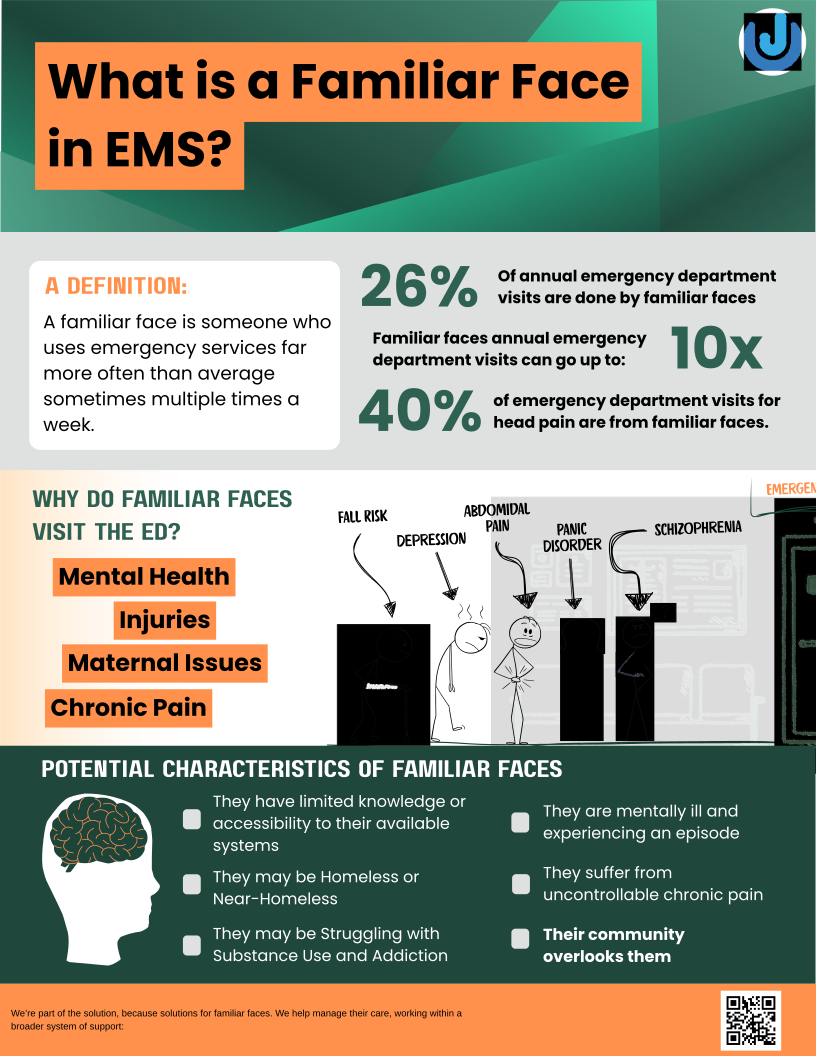
A familiar face isn’t just a frequent flyer. It’s someone who uses emergency services far more than average, sometimes multiple times a week. According to EMS data, familiar faces account for 26% of all annual emergency department visits. For some conditions, like head pain, that number jumps to 40%. Some individuals rack up ED visits at a rate 10 times higher than a typical patient.
Why Do They Keep Coming Back?
Here’s what’s easy to miss: A familiar face in EMS isn’t usually gaming the system. They’re not even on the system’s radar.
The most common reasons they show up in the ED include:
- Mental health crises: depression, panic disorder, schizophrenia
- Injuries: often tied to unstable living situations or fall risk
- Chronic pain: unmanaged and uncontrollable outside a hospital setting
- Maternal issues: a deeply underserved population
But the real story is in the characteristics behind those reasons. Many familiar faces are homeless or near-homeless. Many are struggling with substance use. Many have limited knowledge of, or access to, the healthcare options that actually exist for them. Some are experiencing acute mental health episodes with nowhere else to turn.
And the most heartbreaking characteristic of all? Their community overlooks them.
The Real Problem Isn’t Overuse, It’s Under-Support
It’s tempting to frame frequent ED visits as a resource problem. And yes, it strains systems. But framing it that way gets the causality backwards.
Familiar faces aren’t creating a gap in the system. They’re falling into a gap that already exists, one created by fragmented mental health services, housing instability, inadequate chronic disease management, and social isolation.
When someone calls 911 for the fifth time in a week, the ambulance isn’t the problem. It’s the only door that never closes.
What Needs to Change
The solution isn’t to discourage familiar faces from calling, it’s to build real pathways before they have to. That means:
- Proactive case management for high-frequency users
- Coordinating EMS with housing, mental health, and addiction services
- Training first responders to see the person, not just the call
Emergency services were built for emergencies. But for a significant slice of the population, every day is an emergency, because no one built anything else for them.
Familiar faces don’t need fewer ambulances. They need a system that finally sees them.