Can Community Paramedics Prescribe? What MIH-CP Programs Can and Can’t Do
Many people wonder what paramedics can actually do (we still hear these professionals called ambulance drivers). But bring up community paramedics, and this added word can make things even more confusing. How are community paramedics trained? What’s their certification? Can they prescribe medications? Community paramedics cannot prescribe medications. However, they can administer medications under standing […]
Blood Transfusions at Home: How MIH-CP Brings Hospital-Level Care to the Living Room
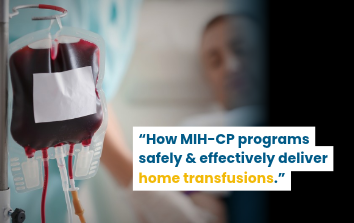
Those who aren’t familiar with home blood transfusions might not realize the benefits this treatment can have for patients. When a new idea comes along, it’s easy to respond with skepticism. In this article, we’ll dive into how mobile integrated healthcare-community paramedicine (MIH-CP) safely and effectively delivers home transfusions. MIH-CP teams deliver blood transfusions with […]
6 Key Ways Cities Reduce Emergency Department Use

Americans made 155 million emergency department visits in 2022, according to the CDC’s National Center for Health Statistics. A meaningful share of those visits came from people whose needs could have been met elsewhere: a clinic appointment, a medication refill, a safe place to sober up, or a crisis counselor. Cities and counties bear much […]
How Mobile Integrated Healthcare Supports Population Health

At the heart of Mobile Integrated Healthcare is the desire to build a stronger community, and public health partnerships are one of the best ways to make that happen. By teaming up with local resources, MIH programs can support population health in ways no single agency could manage alone. In this guide, we’ll dive into […]
Lift Assist Calls: Two Patients Hiding in One Number
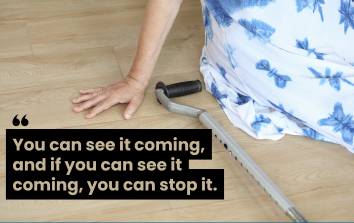
I ask the same question at the start of every strategy session: Do you know there are two types of high utilizers across the USA? Lift assist calls are actually made up of two very distinct callers. They are not cut from the same cloth. And most of our data treats them like they are. […]
MIH-CP and LEAD Partnerships: Breaking the Jail-and-Release Loop
People with untreated behavioral health illnesses or substance use disorder can find themselves stuck in a spiral where their disease leads to minor offenses, arrest, release, and repeat. Law Enforcement Assisted Diversion (LEAD) programs are built on the conviction that, instead of constantly reacting to negative outcomes, we should focus on treating the cause. Community […]
Rural Healthcare Access: How MIH Closed the Gap Early
Mobile Integrated Healthcare (MIH) has been making a big difference in rural healthcare access for years. Only recently have we begun to see programs popping up across the country that specifically target rural health transformation. This article will explore the origins of MIH and rural health, how it’s evolved, and where it’s headed. The recently […]
The Optimal MIH-CP Balance: Quality, Safety, and Access
I spent three days at the NAMIHP Summit in Scottsdale this year, sitting in session after session, and one pattern kept showing up no matter who was at the podium. People weren’t talking about price, quality, and time. They were talking about quality, safety, and access, over and over, in different words but the same […]
The 5 E’s of MIH-CP: How Community Risk Reduction Applies to Mobile Integrated Healthcare

Community Risk Reduction provides fire and EMS agencies with a proven framework for reducing 911 calls before they happen: Engineering, Education, Enforcement, Economic Incentives, and Emergency Response, known across the fire service as the “5 E’s” (U.S. Fire Administration). At NAMIHP 2026, Bloomington Fire Department’s MIH team put those five categories to a specific use: […]