Rural healthcare has a mobile integrated health blind spot. Programs are delivering real results, fewer emergency visits, better care coordination, healthier communities, but when funders and policymakers ask for proof, many come up empty. Not because the care isn’t working, but because the data infrastructure to demonstrate it doesn’t exist.
That blind spot has a price tag. With $50 billion in federal investment through the Rural Health Transformation Program now tying accountability to measurable outcomes, programs that can’t prove cross-agency impact risk being left behind.
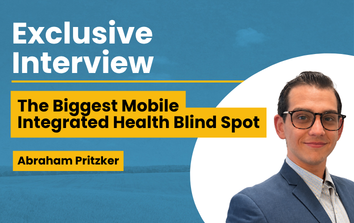
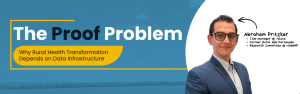
Abraham Pritzker knows this gap firsthand. As a former community paramedic and MIH program director turned Technical Account Manager at Julota, he has lived on both sides of the problem, delivering care in the field and then wrestling with the spreadsheets that were supposed to prove it mattered. On July 1st, he’s joining Julota’s webinar on rural health and MIH to talk about what it actually takes to close that gap.
We sat down with him ahead of the session. Register here to attend live or receive the recording automatically.
What Is the Biggest Blind Spot in Mobile Integrated Health?
The biggest blind spot in mobile integrated health is data: programs deliver fewer emergency visits, better coordination, and healthier communities, then come up empty when funders ask for proof, because the infrastructure to demonstrate cross-agency impact does not exist. With 50 billion dollars in Rural Health Transformation Program funding now tied to measurable outcomes, that blind spot has a price. Abraham Pritzker, a former community paramedic and MIH director, explains it in this interview.
Key Takeaways
- Good programs with bad data lose funding to programs that can prove less.
- RHTP ties 50 billion dollars to measurable, cross-agency outcomes.
- The gap is infrastructure, not effort or care quality.
- A former program director’s view of what the gap looks like from inside.
What Does Abraham Pritzker Say About the MIH Data Blind Spot?
Q: Who are you and what do you do?
A: My name is Abraham. I am currently a technical account manager at Julota. I come from an EMS (Emergency Medical Services) background. I’ve [participated in] several aspects of EMS related care. I really focused a lot of my career on mobile integrated health, so I really was passionate when I was on the road about providing proactive care and reducing the necessary time we spent on reactive interventions. And, right before I came over to Julota, I had the absolute pleasure and opportunity to run a mobile integrated health program at a hospital in New Jersey.”
Q: You’re hosting a webinar soon, what’s your favorite part of the discussion you’re anticipating?
A: Talking about the administrative burden that data integrity can pose on really, really skillful administrators. I did a lot of patient care and I had a lot of sitting behind a desk and sitting at an office, which is fulfilling. But I had a lot of time wasted just reconciling data using spreadsheets. Efficiency was not really something we were able to control for in that setting.
Q: What are you seeing in the field right now that relates to the webinar?
A: Being able to defend the data that you’re sharing with others is paramount. We, as an industry, really crave and need high quality defensible results and conclusions that we can share with others in the mobile integrated health and even EMS sphere.
Throughout my career, I’ve always been very, very passionate about workforce development within EMS. And I think we do have some interesting survey results on some struggles, frankly, that rural health and MIH (Mobile Integrated Healthcare) in general, some barriers and some struggles that we face all the time with our workforce and sustainability of our providers. We want to impact patients. We can only do that with a strong group of providers willing to do the job.
Q: You’ve been vocal about standardization in MIH-CP, how does that apply to this conversation?
A: In mobile integrated health, we’re really fortunate to have worked off of the shoulders of generations before us in traditional 911 based EMS care. We know that MIH came from this scientific model of, there’s a problem, we’re creating a solution to fix it. But now we’re at the point where we have to demonstrate that intervention’s efficacy… Every program probably reports on how many patients they saw, how many referrals they received for MIH, maybe how many providers they had, how many hours they spent doing that. Those are fairly easy program demographics to describe the situation. But now we really have to go the next step.
We need to say, what interventions are we performing that are impacting our populations? The only way to do that in a generalizable way is by identifying standards and commonalities between various MIH programs, describing and identifying phenotypes of community paramedic and mobile integrated health entities, saying what they’re doing, what interventions are they performing, who they’re performing them on, what populations are they serving, and what outcomes are we looking for to demonstrate program efficacy and improve outcomes. Once we do that, once we set an industry standard of what things we need to collect, measure, and share, we’re going to have a really, really, really robust foundation for how MIH works, what we do well, and how can we generalize our intervention to meet many aspects of our underserved populations.
Q: What would you say to people not currently working with Julota?
A: Making sure that the job that they’re doing when they get to work is as streamlined and effective as possible is paramount. We cannot continue providing MIH intervention on a public health scale if we don’t have providers willing to show up to work… reducing the burden on the frontline staff regarding documentation and charting can be really, really helpful in improving job satisfaction in general. Potentially reducing attrition from the field, from MIH specifically, even more so in the rural side of the house.
If you’re going to tackle this on your own, really keep in mind that you want to be able to reduce the time and effort people are spending going into all of your different systems and documenting the same thing potentially over and over. If you do not account for that, do not control for that, you’re introducing a lot of reporter bias. We’re not enhancing data quality [and] we’re not sustaining data integrity when we encourage our frontline providers to over-document instead of keeping it simple while maintaining good data in so we can have good data out.
Q: What’s the overlap between data integrity and provider burnout?
A: The first level of burnout you’re going to see is that they just left charts open for long, and that’s just not good. It introduces more errors. And it’s a sign that, like, “this is a low-hanging fruit I’m going to skip for tomorrow”, and that starts to pile up. I found that that was an early indicator of providers experiencing some burnout.
Data quality does not inherently speak to the quality of your program. People have really great programs, but almost no data to support continuing that program because the administrative burden is so high and the level of technical expertise needed to really highlight your results and your outcomes is pretty high.
If we can defend our data, we can create a nice, clean, polished product to show what our program does every day, that I think is critical, but also separate from the fact that you have a good program, because you can have a good program and not have that shiny outcome data set.
Q: Why should someone attend this webinar?
A: It’s a great opportunity to start talking about underdeveloped parts of the MIH industry. We are really honing in on the proof problem in rural health because that is the next frontier of healthcare in general. Mobile integrated health and EMS, as we know, lives on that bleeding edge of healthcare and of public safety. So getting to dive into this new territory of patient care, ultimately we can implement some things we do really, really, really well in mobile integrated health and on the public health data side. If we combine those two and implement them in rural health, programs are going to become invaluable to the landscape of public health, public safety, and health care in these areas.
Conclusion:
The proof problem isn’t going away and the longer you ignore it the more expensive it will grow. Abraham will be breaking down exactly how MIH programs can close the gap between the care they’re delivering and the data they need to defend it. Register here to join the conversation on July 1st.
Related reading
- The Biggest Shift Since the 1960s: The Bipartisan CARE Act and Mobile Integrated Health
- How Can Mobile Integrated Programs Partner with Public Health?
- Julota Bridges Health Data Sources for EMS Mobile Integrated Health in Redmond, Washington