
In some regions, people wait months for care or go without it altogether. According to the Health Resources and Services Administration (HRSA), more than half of Americans (169 million) live in areas with a shortage of behavioral health professionals. That shortage translates to overworked clinicians, long wait times, and millions of people relying on 911 or emergency rooms when symptoms escalate.

These gaps ripple outward into public safety systems. According to the American Psychological Association (APA), at least 20% of 911 calls in many jurisdictions involve some element of behavioral health. Police, EMS, and dispatchers have become de facto first responders for individuals experiencing a behavioral health crisis, a role most were never designed to fill.
But the landscape is changing fast. Driven by necessity and reinforced by public demand, policy, and technology, behavioral health intervention is being reimagined in many innovative ways.
From integrated care models to mobile crisis units, virtual therapy tools, and data-driven prevention, these innovations share the common goals of making behavioral health care more accessible to everyone and of being more proactive than reactive.
In this article, we will dive into some of the most essential innovations in behavioral health.
Integrated Care Models & Initiatives
Some of the most significant progress has come from integrating behavioral health into the medical settings people already use. Instead of siloing mental health treatment within specialty clinics, integrated models bring behavioral health directly into primary care, emergency departments, and community health centers. This approach treats the whole person and helps identify concerns long before they escalate into emergencies.
- Centers For Medicare & Medicaid Services – Integrated Behavioral Health (IBH) Model: Launched in January 2025, the IBH Model is a federal initiative designed specifically for Medicare and Medicaid beneficiaries, a population with disproportionately high rates of mental health conditions and substance use disorders. The model strengthens care by placing specialty behavioral health practices at the center of integrated, whole-person support. The model begins in three states (Michigan, New York, and South Carolina) and will run through 2032. Through per-person monthly payments and later performance-based incentives, IBH supports teams of behavioral health providers, primary care providers, and social-service organizations working together on behavioral health needs, physical health conditions, and social (housing, food, transportation) drivers of health. The model also emphasizes infrastructure improvements such as interoperability, shared data systems, and “no-wrong-door” access to ensure that individuals receive coordinated, person-centered services that reduce hospital visits and improve long-term outcomes.
- Primary Care Behavioral Health (PCBH): In the PCBH model, behavioral health consultants are embedded in primary care practices. They provide brief interventions, immediate consultation, and population-based support for common conditions like anxiety and depression. Because the service is on-site, patients can address both physical and mental health needs in a single visit, improving follow-through and reducing stigma.
- Collaborative Care Model (CoCM): Another widely adopted approach, the CoCM model, connects a primary care provider with a behavioral care manager and a psychiatric consultant. This triad tracks progress using standardized tools and adjusts treatment in real time. Studies from the University of Washington’s AIMS Center show that CoCM can double remission rates for depression compared with traditional primary care. According to the AIMS Center, patients treated under CoCM are twice as likely to see symptom improvement.
- Screening, Brief Intervention, and Referral to Treatment (SBIRT): The SBIRT model is a public-health, integrated early-intervention framework designed to identify, engage, and refer individuals with risky substance use behavior or emerging substance use disorders before they escalate. Delivered in settings like primary care clinics, emergency departments, schools, and community health centers, it comprises three core components:
- Screening – a universal, rapid assessment of substance use risk
- Brief Intervention – short, focused conversations aimed at increasing insight and motivation for change
- Referral to Treatment – connecting individuals with more intensive services when needed.
SBIRT emphasizes early engagement, is embedded in non-specialty settings, and supports seamless linkage to care. Evidence shows strong outcomes for alcohol misuse and promising results for drug use. By integrating SBIRT into primary care and other health settings, systems can catch behavioral health needs earlier, reduce barriers to treatment, and ensure that behavioral and physical health care work together more effectively.
Crisis Response Reinvented
Perhaps no area has evolved more dramatically than crisis response. Across the country, communities are rethinking how they respond to behavioral health crises. The National Association of Mental Illness (NAMI) describes an effective crisis system as having three essential components: someone to call, someone to respond, and somewhere to go.
- The first component, someone to call, has been successfully implemented nationwide. 988, a simple, nationwide number, connects people with trained crisis counselors twenty-four hours a day, seven days a week.
- The arrival of the 988 Suicide and Crisis Lifeline in 2022 created a new national entry point for behavioral health emergencies.
- Julota outlines how 988 was designed to mirror the simplicity of 911, providing people with an easy, three-digit number to call during a behavioral health crisis. The article explains where the two systems overlap and where they differ, noting that 988 excels in providing immediate emotional support but still depends on effective interoperability with 911 for emergencies that require coordinated medical or other safety responses. Strengthening the connection between the two systems is essential for ensuring people in crisis are routed to the most appropriate help.
- The second component is a mobile crisis team that can be dispatched when a crisis cannot be resolved by phone.
- Mobile Crisis and Alternate Response Teams – Mobile crisis teams, made up of clinicians and paramedics or EMTs, respond to behavioral health emergencies in the field. Several cities around the country have specialized MCT programs that are sent to handle non-violent behavioral health calls. These programs reduce arrests, hospital transports, and use of force while connecting individuals to the care they need. They also build community trust by sending the right help at the right time. The data from these programs are very compelling.
- Eugene, Oregon’s Crisis Assistance Helping Out On The Streets (CAHOOTS) resolves 99% of calls without police backup, and recent data showed a 24% reduction in arrests when the CAHOOTS team responded.
- Denver’s Support Team Assisted Response (STAR) – Since 2020, STAR has handled about 12,000 encounters, with only 3% leading to a psychiatric hold. Most crises were resolved safely through de-escalation, transport to care, or referral to community supports.
- New York City’s Behavioral Health Emergency Assistance Response Division (B-HEARD) – 91% of B-HEARD clients who had previously received an EMS response reported that the B-HEARD team was a more helpful and appropriate response.
- Co-responder teams – In this model, a mental health professional rides alongside a specially trained law enforcement officer, forming a co-responder team for behavioral health-related calls and ongoing follow-up. These teams help stabilize situations, connect individuals with needed services, and offer a more effective, person-centered alternative to standard law-enforcement responses.
- Mobile Crisis and Alternate Response Teams – Mobile crisis teams, made up of clinicians and paramedics or EMTs, respond to behavioral health emergencies in the field. Several cities around the country have specialized MCT programs that are sent to handle non-violent behavioral health calls. These programs reduce arrests, hospital transports, and use of force while connecting individuals to the care they need. They also build community trust by sending the right help at the right time. The data from these programs are very compelling.
- The third component described by NAMI is access to short-term crisis stabilization facilities that provide an alternative to the emergency room, such as crisis receiving centers, respite programs, and twenty-four-hour observation units, where people can go instead of an emergency department or jail.
Together, these three pieces form a continuum that mirrors the structure of 911 but is tailored to behavioral health needs. New 2025 data from NAMI and Ipsos show how this vision is taking shape. Three years after 988 launched, public awareness has reached an all-time high, with nearly three out of four Americans aware of the service.
More than 16 million people have contacted 988 since launch, and 71% report receiving some or all of the help they needed. The public strongly supports continued investment in crisis services.
While so much progress has been made over the past few years, many communities still lack mobile crisis teams or crisis receiving centers. These gaps highlight the need to build out the crisis continuum fully. NAMI’s three-part model remains the guiding framework: a system where every person experiencing a mental health crisis has someone to contact, someone to respond, and a safe place to get help.
Technology’s Role in Behavioral Health Intervention
Technology is reshaping how people interact with behavioral health care, how crises are detected, and how systems coordinate. According to the National Institute of Mental Health, digital tools enable real-time monitoring, on-demand support, and earlier intervention, even for those not engaged in traditional services. Telehealth, digital therapeutics, and predictive analytics are extending the behavioral health reach.
- Telebehavioral health visits, which surged during the COVID-19 pandemic, continue to expand access in underserved and rural areas. According to the NIH, telehealth use in mental health has stayed dramatically elevated, holding steady at about ten times the volume seen before the pandemic.
- Another promising category is digital therapeutics. Digital therapeutics are clinically validated software applications that are prescribed for specific mental health conditions. A recent randomized controlled study found that a personalized, data-driven mobile therapeutic significantly reduced symptoms of depression and generalized anxiety compared to a control group. Improvements were strongest among people with more severe baseline symptoms, highlighting digital therapeutics as a scalable, low-barrier option for expanding access to evidence-based mental health care.
- Meanwhile, predictive analytics and digital phenotyping use data from smartphones and wearables to identify early warning signs of relapse or crisis, prompting outreach before symptoms worsen. When used responsibly and ethically, and combined with human care teams, these technologies enable a level of continuous, personalized support that was not possible a decade ago.
The Thread That Connects It All: Coordination and Data
- Every innovation described, from mobile clinics to digital therapeutics, depends on coordination. Fragmentation remains one of behavioral health’s biggest challenges. Hospitals, dispatch centers, social services, and crisis teams often operate on separate systems, with limited ability to share information or track outcomes.
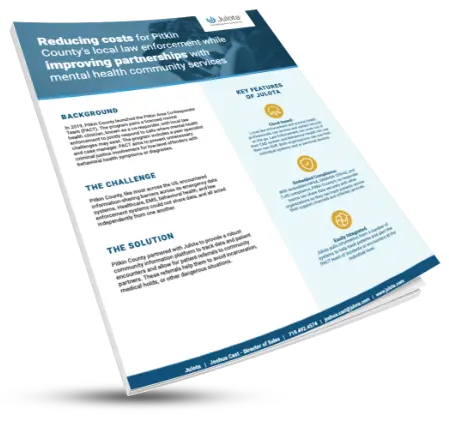
- Modern platforms and consent-based data-sharing frameworks, such as Julota, are starting to close those gaps. Systems that enable care teams to view a client’s history, document interactions, and securely send referrals ensure continuity across programs. Communities using shared dashboards report faster follow-ups and fewer people “lost” after a crisis encounter.
New and Emerging Behavioral Health Advancements
According to the National Institute of Mental Health (NIMH), about 30 % of people with depression do not respond to standard medication. Research into neurological and psychedelic-assisted treatments is widening the clinical toolbox.
Transcranial Magnetic Stimulation (TMS) and Vagal Nerve Stimulation (VNS) are now FDA-approved for treatment-resistant depression. Early studies of psilocybin and MDMA show promise for PTSD and severe depression. While still tightly regulated, these therapies represent the field’s willingness to innovate beyond traditional pharmacology.
Conclusion: The Next Chapter of Behavioral Health Intervention
Behavioral health care is entering a new era defined by accessibility, coordination, and prevention. Integrated care models now treat the whole person across medical and behavioral health settings.
Community-based crisis programs provide direct support to individuals and reduce reliance on law enforcement. Technology expands access and strengthens the connections between providers. And emerging therapies continue to push the field forward. Together, these innovations reflect a system moving toward more proactive, more connected, and more person-centered care.