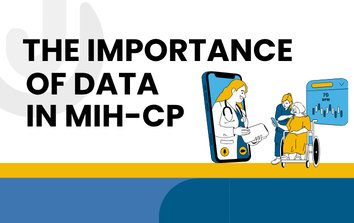
Community paramedicine data sharing doesn’t typically evoke strong excitement – this article seeks to change that. By the end of this discussion, you’ll be introduced to a whole new world of community paramedicine data collection and sharing. You’ll understand why it’s so important, how to collect it, and how to wield it for success.
Community paramedicine data is what makes the world go around, providing an objective basis for building a successful program. Good data drives everything. It will inform your mobile integrated healthcare program’s finances, patient care, health outcomes, and future partnerships. Simply put, good data management is essential to a strong MIH-CP program.

Sadly, many programs are doing data collection wrong. They’re making a mistake at one of the critical phases – collection, evaluation, distribution – and they don’t even know it. After reading this article, you’ll be a step closer to effective data management for your MIH-CP program.
Why Does Community Paramedicine Data Sharing Matter?
Community paramedicine data sharing matters because good data is the objective foundation of a successful MIH-CP program: it informs finances, patient care, health outcomes, and future partnerships. Shared data draws in financial partners, allows real-time adjustments to patient care, keeps providers honest about community needs, and brings health partners together. Many programs collect data wrong at one critical phase, and this article is about getting it right.
Key Takeaways
- Good data drives finances, care, outcomes, and partnerships.
- Financial partners commit to programs whose data they can see.
- Real-time adjustments to care depend on collecting the right things.
- Sharing is what turns collected data into partnerships.
Why Is Data Sharing Critical to MIH-CP Success?
Many people dismiss good healthcare data collection as boring. Nothing could be further from the truth. The word data, specifically, is often associated with the code – the ones and zeros – that powers our computers. However, for this article, whenever we use the word “data,” just think of the word “knowledge.” Because, at the end of the day, that’s what data collection is all about. It’s about knowing more (about everything).
The definition of the term “data” is the collection and analysis of facts and statistics. In other words, when we talk about data, we’re not talking about speculation or random opinions; we’re talking about real information that we can use to improve every aspect of our lives.
When we talk about data specifically for MIH-CP, we’re often referring to data about the people we serve. What does this look like? It could mean measuring the number of people who go to the ER each month. Or, more specifically, recording the number of those people at the ER who could have been treated at home.
Data could also be measuring results. For example, you start an MIH-CP program aimed at reducing the number of people who go to the ER when they could have been treated at home. Did the program work? This is the kind of critical information that good data gives us.
Hopefully, you’re already more excited about the word “data” as it relates to your mobile integrated health program. Now, let’s jump into some specifics about why data is so important.
Why community paramedicine data is so important for MIH-CP:
- Data Demonstrates Objective Reality that Allows MIH to Build a Strong Foundation
- Good MIH-CP Data Increases the Ability to Draw in Financial Partnerships
- Collecting Good Data Allows for Real-time Adjustments to Patient Care
- Data Collection Leads to Better Patient Outcomes and Keeps Providers Honest about Community Needs
- Data Collection Brings Community Health Partners Together
Good data vs. bad data: Throughout this guide, you’ll see the phrase “good data.” When we talk about data, it’s important to know that not all forms of data are equal. And, just as good data can be the secret to an MIH-CP program’s success, bad data can be the kryptonite that results in failure.
Community Paramedicine Data and Objective Reality: Building a Strong MIH-CP Foundation
Objective reality, what we can see and touch, should be the basis of most decision-making when it comes to MIH-CP. Subjective reality, what we feel and think, should play a role, but it should not be the bedrock of decision-making. Good data leads us toward objective reality; bad data leaves us at the whim of chance.
Think of starting a new MIH-CP program (or even a new branch of an existing program) like a farmer looking to plant a new crop in a field. Before the farmer plants the crop, what does he want to know? He needs good data on the soil, the weather, and the potential for disaster.
Now, if the farmer were to take a shortcut and skip the step of collecting good data on the environment, what could happen? Well, he could get lucky. But he could also be very unlucky. And here’s the catch – even if that farmer is lucky, what will happen when he wants to bring in partners or potential investors? The first thing they will ask for is the data on the soil, the weather, and the potential for disaster.
For this reason, it’s crucial to take good data collection seriously. It could be that you have a gut instinct about something, and it could very well be that your gut instinct is correct, but when you go trying to build partnerships (as we’ll discuss later), good data will rule the day.
How Does Good MIH-CP Data Draw In Financial Partners?
As we just mentioned, data collection isn’t just for your program; it’s also for the people who may partner with you. Many MIH programs around the country list data collection as a key part of their success plan. Let’s provide an example of how this can play out in MIH-CP.
Say your program started visiting people who frequently return to the hospital after being discharged. Your goal is to reduce hospital readmissions. You start the program, it’s going well, and after a while, you want to expand to get other hospital systems on board.
At this point, it is crucial to have good data on those patients. Partnering hospitals won’t just take your word for it – if they’re planning to put up money to fund the expansion of the program, they will want to know that what they’re investing in has a proven track record – they will want to know that you can do for them what you’ve done for others.
The more specific (and accurate) your data collection, the greater the likelihood of strong program expansion.
How Does Good Data Allow Real-Time Adjustments to Patient Care?
Another way data collection is valuable to your MIH-CP program is that it shows you what’s not working. Here’s a question: if you were on a path for failure, would you want to know it before it’s too late? Of course – we all would! And that’s what good data collection can do.
Let’s return to our example in the last section. You’ve got an MIH-CP program that wants to reduce hospital readmissions. You’ve got a plan in place, and you hit the ground running. You’re even planning to collect good data. The problem? You decide that you’ll only collect data at the beginning and the end of the year. But, at the end of the year, when it’s finally time to see if the program worked, you’re disappointed to find that the MIH-CP team failed to reach their goals.
In this scenario, if the team had checked the data more regularly, perhaps they could have caught the problem earlier, made a course correction, and ended the year successfully. Data collection is great – but regular data collection is often even better.
Data Collection Leads to Better Patient Outcomes and Keeps Providers Honest about Community Needs
Not only can data collection help the MIH-CP team reach its goal, but it can also help patients reach theirs. People with chronic diseases often have specific benchmarks they must meet to maintain their health. This is especially true for people with chronic heart problems, diabetes, and lung disease.
If an MIH-CP team fails to collect good data on their patient’s health, they won’t know if the care they’re providing is really making a difference. Not only does this jeopardize the program, but it also jeopardizes a human being’s health. Data collection doesn’t just help business ventures succeed; it helps people lead better lives.
How Does Data Sharing Bring Health Partners Together?
Good community paramedicine data sharing doesn’t just bolster your MIH-CP program; it strengthens the community. However, this can only happen if the data collection tools you use are robust enough to handle the task.
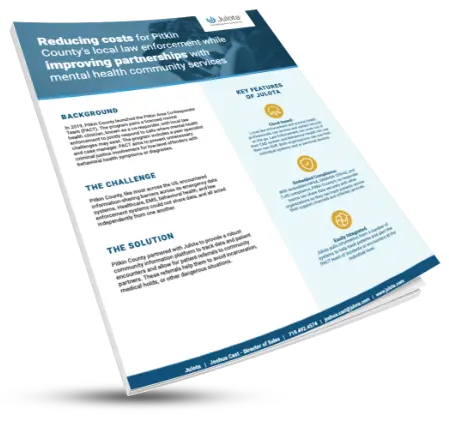
Tools like Julota enable community paramedicine data sharing across different platforms — hospital staff can communicate with ambulance personnel, who can then connect with mental health teams, and so on. Creating this kind of network eliminates wasted time and resources and builds real collaboration among health providers.
Final Take: How Community Paramedicine Data Sharing Can Transform Healthcare
Good community paramedicine data sharing is valuable to MIH-CP in many ways. Not only does it provide an objective reality from which to work, but it also allows providers to correct course in real time, bring partners into the fold, and deliver the highest quality care to their community.
Contact Julota for more information on how their data collection tools can help your MIH-CP program safely store and share key information in the modern healthcare landscape.
Related reading
- How Community Paramedicine Uses Chronic Care Home Monitoring to Improve Patient Outcomes
- Evolving EMS Into Community Paramedicine for Whole-Person Care and Beyond
- EMS in Whatcom County, WA Uses Data-Sharing In Fight Against COVID-19