Share this Article
Home > News & Articles > The Best Practices For Implementing A Co-Responder Program

The Best Practices For Implementing A Co-Responder Program

Download Our Free Case Study

In communities across America, a quiet revolution is transforming how we respond to mental health crises. While traditional policing models often struggle with these situations, co-responder programs offer a powerful alternative. This article delves into the best practices for implementing co-responder programs, the challenges, and the future trends.

The numbers tell the story: in one eye-opening example, 98% of mental health crisis calls handled by co-responder teams avoided arrests altogether. These innovative partnerships between law enforcement and mental health professionals aren’t just changing outcomes—they save lives, cut costs, and rebuild community trust.

But what really makes these programs tick? Let’s uncover the key ingredients behind successful co-responder initiatives.
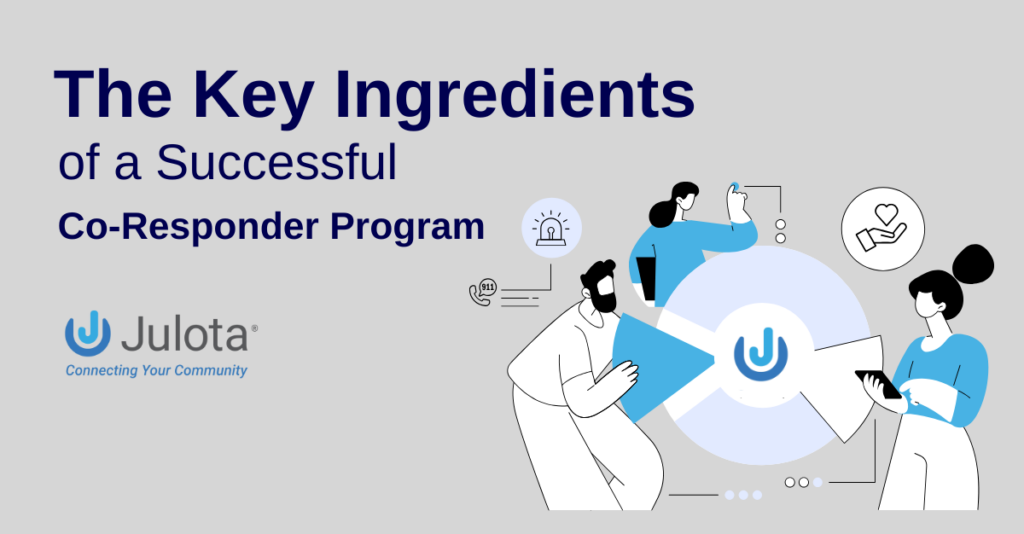
What is a Co-Responder Program?

A co-responder program teams up police officers with mental health professionals to jointly respond to calls involving people in mental health crises. Our examples below show that the definition is rapidly changing to include EMS and other agencies.

This teamwork approach significantly shifts from the traditional police-only response to behavioral health emergencies.

The co-responder model creates a specialized team ready to handle tricky situations where criminal justice and mental health issues overlap. When a call suggests mental health problems, both a police officer and a clinician show up together, each bringing their expertise to the table.

Unlike standard police responses, co-responder programs focus on de-escalation, assessment, and connecting people with the right services rather than just making arrests. The mental health professional can evaluate the situation on the spot while the officer keeps everyone safe, creating a more well-rounded approach to crisis intervention.

These partnerships look different across communities, but all co-responder programs share the same core belief: mental health crises deserve specialized, compassionate responses that regular policing alone can’t provide. By combining public safety know-how with clinical expertise, these teams tackle immediate safety concerns while working toward long-term solutions for vulnerable individuals.

Essential Components of Successful Programs

Creating an effective co-responder program takes more than just pairing officers with clinicians. The most successful programs share several key elements that ensure they work and last.

Strong partnerships form the backbone of any successful co-responder model. These partnerships must go beyond surface-level teamwork, building real cross-system integration between police departments, mental health providers, and community organizations.

The best programs develop formal agreements that spell out who does what, who’s responsible for what, and how information gets shared between all the players.

Comprehensive training is another cornerstone of high-performing co-responder programs. Both officers and clinicians need specialized instruction in crisis intervention, de-escalation techniques, and how to respond together effectively.

This joint training helps build mutual understanding and respect between professions that have traditionally operated in separate worlds.

Clear operational protocols are essential for day-to-day work. Successful programs establish specific guidelines for when teams get deployed, how they fit into existing emergency response systems, and what follow-up steps should happen afterward.

These protocols help ensure consistency while allowing enough flexibility to address unique situations.

Robust data collection and evaluation systems enable continuous improvement. The most effective programs track essential metrics like response times, diversion rates, connections to services, and long-term outcomes.

As one program showed, this data-driven approach can lead to impressive results, with 86% of crisis calls ending with people successfully connected to appropriate treatment and community resources instead of arrests or emergency room visits.

Benefits of Implementing Co-Responder Programs

The advantages of well-run co-responder programs go far beyond individual crisis interventions, creating positive ripples throughout community systems. These benefits make a strong case for why more communities adopt this innovative approach.

Perhaps the most striking benefit is the dramatic drop in unnecessary arrests. Research shows that co-responder programs successfully divert people in crisis from the criminal justice system.

This shift isn’t just a statistical change—it represents a fundamental rethinking of how we respond to mental health crises.

Co-responder programs also significantly improve access to appropriate care. When mental health professionals participate in crisis responses, they can assess situations immediately and help connect people with services. Evidence shows these co-response teams connect individuals to treatment and community resources in 86% of active calls, creating paths to recovery instead of cycles of jail time.

The financial impact is just as compelling. Communities with co-responder programs report substantial savings through fewer emergency room visits and jail bookings. One analysis estimated cost savings at $350,000 per year per co-responder, making these programs not just compassionate but fiscally smart, too.

Police efficiency improves noticeably as well. With mental health professionals handling the clinical aspects of crisis calls, officers can get back to patrol duties more quickly. One jurisdiction saw an increase from 26.4% to 38.4% of officers returning to field duties after starting their co-responder program, effectively expanding police coverage without hiring more officers.

Case Studies of Successful Co-Responder Programs

Looking at real-world examples gives us valuable insights into what makes co-responder programs effective. These case studies showcase approaches that have delivered impressive results across various communities.

Denver’s Crisis Intervention Response Unit pairs mental health clinicians with police officers to handle mental health-related calls. This program has dramatically reduced arrests and increased diversion to mental health treatment instead of jail.  

In Bensalem, Pennsylvania, the local co-responder program achieved remarkable results by focusing on immediate crisis response and follow-up care. This approach has diverted 55% of cases from potential arrest to behavioral health services, significantly reducing repeat calls from frequent 911 users. This program shows the long-term value of therapeutic interventions by addressing underlying issues rather than just immediate symptoms.

Arapahoe County, Colorado, provides another compelling example of AllHealth Network’s co-responder programs serving six police departments. About 40% of calls result in crisis intervention without needing emergency room or jail trips, and 70% of follow-ups successfully connect clients to mental health services. This high connection rate shows good follow-up protocols importance in co-responder models.

San Francisco’s Street Crisis Response Team takes a unique three-person approach. Each team includes a paramedic, mental health clinician, and peer counselor with lived experience, providing 24/7 rapid, trauma-informed response to behavioral health crisis calls. This model shows how co-responder programs can evolve beyond the basic officer-clinician pairing to include additional perspectives that help engage vulnerable populations.

Best Practices For Implementing Co-Responder Programs

Launching a successful co-responder program requires strategic planning and following established best practices. Communities considering this model can learn from those who’ve already navigated the implementation process.

Start with comprehensive stakeholder engagement. The most effective programs begin by bringing together police, mental health agencies, emergency services, community organizations, and people with lived experience.

This collaborative foundation builds mutual understanding and shared ownership that keeps programs going long-term. Many successful initiatives trace their origins to connections formed at events like the National Co-Responder Conference, where implementers share insights across communities.

Develop clear, written policies and procedures that define roles, responsibilities, and operational protocols. Successful programs establish formal agreements between partner agencies covering everything from dispatch criteria to information sharing. These documents should detail when co-responders are deployed, how they coordinate with other resources, and what follow-up procedures happen after initial contact.

Careful personnel selection is crucial for program success. Not every officer or clinician is well-suited for co-responder work, which requires flexibility, communication skills, and comfort with ambiguity.

The best programs implement specialized selection processes that identify people with the right temperament and mindset for this unique role and then provide rigorous cross-training to build collaborative skills.

Implement robust data collection systems from day one. Effective programs track key metrics like response times, diversion rates, service connections, and long-term outcomes.

This information demonstrates the program’s impact and enables continuous quality improvement as the program evolves. The most successful programs regularly review this data to spot trends and adjust their approach accordingly.

Secure sustainable funding through diverse sources. While many co-responder programs start with grant funding, the most durable initiatives develop blended funding models that combine agency budgets, healthcare reimbursements, and community investments.

This approach ensures program continuity even when individual funding streams fluctuate.

Finally, systematic self-care should be built for co-responder team members. This work exposes staff to high-stress situations and potential vicarious trauma. Effective programs implement regular debriefing, clinical supervision, and wellness resources to keep the team healthy and prevent burnout.

Challenges and Solutions in Co-Responder Programs

While co-responder programs offer tremendous benefits, they also face significant challenges that must be thoughtfully addressed for successful implementation. Understanding these obstacles—and their potential solutions—is crucial for communities considering or refining a co-response approach.

Staffing challenges consistently rank among the most pressing issues. Finding police officers and mental health professionals with the right temperament, skills, and interest in crisis work can be challenging.

Successful programs overcome this by developing specialized recruitment strategies that look beyond traditional qualifications to identify candidates with natural de-escalation abilities and a genuine interest in serving vulnerable populations. Cross-training is essential, ensuring that all team members understand law enforcement and clinical perspectives.

Funding sustainability represents another significant hurdle for many programs. Initial grant funding often launches these initiatives, but long-term stability requires more permanent resources.

Forward-thinking communities address this by documenting cost savings in other systems (reduced ER visits, fewer jail bookings) and using this data to justify permanent budget allocations. Some programs have successfully secured funding through healthcare systems that benefit from reduced emergency department use.

Data-sharing barriers frequently undermine co-response effectiveness. Legal and technical obstacles to information exchange between criminal justice and healthcare systems can leave co-responders without critical information during crisis encounters. Programs overcoming this challenge implement secure data-sharing platforms designed for co-responder work, with clear protocols that balance privacy concerns with operational needs.

Cultural differences between law enforcement and mental health systems can create friction within co-responder programs. These professions operate with different languages, priorities, and approaches to problem-solving.

Successful programs address this through joint training, regular team-building activities, and creating shared values that bridge professional divides. The most effective initiatives actively nurture a unique “third culture” that combines elements from both systems while developing its own identity.

Limited mental health service capacity often constrains what co-responders can accomplish. Even the best crisis response is ineffective without adequate follow-up resources.

Innovative programs tackle this by mapping community resources, identifying service gaps, and advocating for expanded treatment options. Some co-responder programs have even catalyzed the development of new services, like crisis stabilization units specifically designed to receive their referrals.

Future Trends and Innovations in Co-Response

The co-response landscape continues to evolve rapidly, with emerging trends and innovations reshaping how communities address behavioral health crises. These developments point toward an increasingly sophisticated and specialized future for co-responder programs nationwide.

Technology integration represents one of the most transformative trends in co-response. Advanced data platforms now enable real-time information sharing between team members, while mobile apps provide immediate access to resource directories and assessment tools in the field.

Co-Response teams are implementing these technologies to enhance decision-making and streamline service connections.  

Diversification of team composition marks another significant evolution. While traditional co-responder programs pair officers with clinicians, new models are expanding to include peer support specialists with lived experience of mental health challenges.

This three-person approach has shown remarkable success in building rapport with individuals in crisis. The San Francisco Street Crisis Response Team exemplifies this trend, utilizing peers alongside medical and mental health professionals to provide more holistic and relatable support.

Specialized co-responder units tailored to specific populations are emerging across the country. Veterans-focused teams address the unique needs of former military personnel, while youth-centered teams receive specialized training in adolescent development and family dynamics.

This targeted approach allows teams to develop deep expertise with particular populations rather than using a one-size-fits-all approach.

Integration with broader crisis systems represents another promising direction. As the national 988 crisis line expands, co-response teams are developing seamless coordination with these services, creating more comprehensive crisis support networks.

Communities are creating “no wrong door” systems where co-response teams function as one component within an integrated continuum of crisis services.

Proactive outreach rather than reactive response is gaining traction among established programs. After identifying frequent users of emergency services, these teams conduct preventative visits during non-crisis periods to develop relationships, create safety plans, and connect individuals with resources before emergencies occur.

This upstream approach reduces crisis calls while building community trust.

Conclusion: Why Co-Responder Programs are Crucial Today

In today’s complex social landscape, co-responder programs have become vital components of community safety and public health systems. These collaborative models represent a fundamental shift in how we approach behavioral health crises—from punitive responses to compassionate intervention and connection to care.

The evidence clearly shows that co-response delivers meaningful results. From dramatic reductions in unnecessary arrests to significant improvements in connecting vulnerable people with appropriate services, these programs transform outcomes for people in crisis.

When mental health professionals and police officers work side by side, they create solutions that neither could achieve alone.

Co-responder programs also address critical systemic issues facing our communities. They help relieve the inappropriate burden placed on police as de facto mental health first responders—a role officers themselves frequently acknowledge they’re not ideally trained for.

At the same time, these programs reduce the costly cycling of vulnerable individuals through emergency rooms and jails, creating substantial savings for public systems.

Perhaps most importantly, co-responder programs offer a path toward healing fractured relationships between public institutions and marginalized communities. By showing that safety concerns and compassionate care can coexist, these programs help rebuild trust that has been damaged through decades of criminalizing mental illness and substance use disorders.

As communities continue facing rising mental health needs with limited resources, co-responder programs provide a practical, proven approach that balances immediate crisis response with long-term solutions. Their effectiveness comes from recognizing that behavioral health crises require specialized expertise, collaborative strategies, and a fundamental commitment to human dignity.

The future of community safety and behavioral health care will increasingly depend on the thoughtful implementation and continuous improvement of co-response models. Communities that invest in these programs today are building more effective, equitable, and humane systems that better serve all residents, especially those most vulnerable in moments of crisis.


Author

You Might Also Be Interested In

Download Our Free Case Study

See How Similar Programs Are Scaling Up and Transforming Patient Experiences.

Download Our Free CRP Case Study

We only send you awesome stuff =)

Download Our Free MIH Case Study

We only send you awesome stuff =)

Privacy Policy

Last Updated: July 30, 2024

Julota is committed to protecting your privacy and is constantly working to give you a safe online experience. This “Privacy Policy” applies to Julota and governs its data collection and usage. Please read our Privacy Policy for more information.

  1. DEFINITIONS
    1. “Data” includes both Non-Personal Information and Personally Identifiable Information.
  1. “Non-Personal Information” is any information that is not Personally Identifiable Information (defined below). Non-Personal Information includes, without limitation, Personally Identifiable Information that has been anonymized.
  1. “Personal Information,” “Personally Identifiable Information,” “PII,” or “Personal Data” will have the meaning set forth in the applicable data privacy and security laws for the jurisdiction you are located in. In general, Personal Data is non-public information we receive from your use of the Site that can be used, alone or in combination with other information in our possession, to identify a particular person/individual. It may include information such as name, address, telephone number, health and medical related information, and other personal information you provide us. Examples of Personal Data, include, but are not limited to: first and last name, street address, email address, telephone number, social security number, IP addresses, and healthcare related information.
  1. “Julota,” “we,” “us” and “our” refers to Julota.
  1. “Site” refers to Julota’s website at Julota.com and other related blogs, domains, mobile sites, online services, and applications maintained by Julota.
  1. “You” and “your” mean the individual or entity visiting or using the Site.
  1. INFORMATION COLLECTED AND CONSENT

You do not have to provide any Personally Identifiable Information to browse the publicly available pages of the Site; however, in order to obtain or use products or services that are or may be provided through the Site or that we may otherwise offer online or offline (collectively, the “Services”) you may be required to register and/or provide Personally Identifiable Information.

  1. Personal Data You Provide Us

We may collect Personal Data from you in a variety of ways, including, but not limited to, when you (i) register on the Site; (ii) fill out forms or fields on the Site or offline; (iii) complete an application for a product or service available through the Site; (iv) communicate with us through the Site or by email, telephone, facsimile or other electronic means; (v) process payments; (vi) provide us with Personal Data; (v) participate in activities or utilize resources provided by or through Julota; or (vi) submit or authorize the submission by third parties to submit information through the Site. We collect or may collect, among other Personal Data you provide to us, the following categories of Personal Data from you:

  • Identifiers such as a real name, alias, postal address, unique personal identifier, online identifier, Internet Protocol address, email address, account name, social security number, driver’s license number, passport number, or other similar identifiers.
  • Personal Data as defined by applicable law, including without limitation as defined by Cal. Civ. Code Section 1798.80(a).
  • Employment and education information.
  • Internet or other electronic network activity information, including, but not limited to, browsing history, search history, and information regarding a consumer’s interaction with an internet website application, or advertisement.
  • Geolocation data.
  • Professional or employment-related information.

We will treat as Personal Data any item that, either alone or together with other information, we could use to identify an individual. Except as described below, we will not share with third parties any personal information without your permission.

By providing your Personal Data to us, you explicitly agree to our collection and use of such information as described in this Privacy Policy. By providing Personal Data belonging to another person, you expressly represent and warrant that you have the authority and right to do so, and that you obtained all appropriate and required consents.

We may also collect your Personal Data from sources that you have authorized to share with us or that you have authorized us to obtain information from.

We may also collect information about you from third parties related to transactions you are contemplating entering into with us or that you have entered into with us.

If you believe we received our personal information from a source without authority to share your personal information with us, please contact us so that we can resolve your complaint.

  1. Information We Automatically Collect

Julota may collect information about you automatically when you visit the Site, communicate through the Site, or use any of our online Services.

System Information: We may automatically receive certain information from your browser or mobile device, such as your browser type, the operating system of your device, the equipment you use to access the Site, and the unique identifier of your mobile device.

IP Address: We may also receive your IP address and the name of the internet service provider (“ISP”) or your mobile carrier.

Browsing Information: We may collect the URL of the site from which you came and the URL of the site you visit when leaving the Site or any of our online Services and your activities on the Site, such as webpages you view and how you interact with those webpages.

Location: We may collect, depending on your device’s settings, location data and other types of information sent from third party services or GPS-enabled devices.

Site Usage: As you use the Site or any of our online Services, we may also collect information about such usage and your actions on the Site, such as pages you viewed, access times, and how long you spend on a page. We may use cookies to collect such information, as described in more detail below. This information is considered Non-Personal Data, which we can use for any purpose, including, without limitation, to help us improve the Site or the Services and to enhance your, and other users’, experience.

Aggregated Anonymized Data: We may also convert personal information into Non-Personal Information by excluding information that is personally identifiable. You acknowledge that Non-Personal Information and Personal Information that is converted into Non-Personal Information belongs to Julota and that Julota has the right to use such general information as it determines in its sole discretion.

  1. Cookies, Advertising Platforms and Similar Technologies Used on the Site

The Site or our online Services may use “cookies,” or other identifiers, which may be stored on your device, to recognize you as a user when you return to the Site or use the online Services using the same computer and web browser and to maintain your preferences. We use cookies and other identifiers to identify which areas of the Site or online Services you have visited and how you interact with the Site. We also may use this information to better personalize the content you see on the Site or online Services, serve you with personal advertisements for Julota and third-party products, either via email, on our Site, or on other websites on the internet . We do not store unencrypted Personal Data in cookies. We also do not link Non-Personal Information from cookies to your Personal Data.

In addition, we may use the services of advertising platforms to provide relevant marketing to consumers concerning our Services.

In general, we use four different types of cookies:

Strictly necessary cookies: These cookies are necessary to enable the basic features of the Site, including any of our applications, such as providing a secure login.

Functional cookies: These cookies allow our Site to remember your site preferences and choices you make on the Site. We also use functional cookies to facilitate navigation, to display content more effectively, and to personalize your experience.

Advertising cookies: Advertising cookies allow us to select which advertisements and offers you may like. We also use cookies to track online responses to advertisements and other marketing to better understand your interests so that we can present more relevant advertisements and messages to you.

Analytics cookies: Analytics cookies help us improve our website by collecting and reporting information on how you use it.

Disabling Cookies on Your Browser: Some browsers may allow you to manage the storage of cookies on your device. If supported by your browser, you may set your browser to refuse all cookies (or, sometimes all third-party cookies) or to alert you when a cookie is placed. However, if you select these setting, you may be unable to access certain parts of the Site or the online Services. Unless you have adjusted your browser setting to refuse cookies, the Site and online Services will issue cookies. For more information about how to manage your cookie preferences, use the ‘help’ menu of your web browser or explore the customer support sections of your web browser. To opt-out of all cookies or certain advertising cookies, visit the company website for your browser for instructions.

Opting-out of Personalized Ads: You can opt-out of receiving personalized ads from advertisers and ad networks that are members of the Network Advertising Initiative (“NAI”) or who follow the Digital Advertising Alliance (“DAA”) Self-Regulatory Principles for Online Behavioral Advertising using their respective opt-out tools. The NAI’s opt-out tool can be found here: http://www.networkadvertising.org/choices and the DAA’s opt-out tool can be found here: http://www.aboutads.info/choices/.

In addition, your mobile devices may offer settings that enable you to make choices about the collection, use, or transfer of mobile app information for online behavioral advertising (for example, Apple iOS’ Advertising ID and Google Android’s Advertising ID). Please note that opting out does not prevent the display of all advertisement to you.

  1. HOW WE USE AND SHARE YOUR PERSONAL DATA

Except as described below, we will not share with third parties the link between your IP address and your Personal Data without your permission.

By providing your Personal Data to us, you explicitly agree to our collection and use of such information as described in this Privacy Policy. By providing Personal Data belonging to another person, you expressly represent and warrant that you have the authority and right to do so, and that you obtained all appropriate and required consents.

We may also collect your Personal Data from sources that you have authorized to share with us. We will use your Personal Data in those circumstances to provide the Services that your Personal Data was shared with us to fulfill. If you believe we received your Personal Data from a source without authority to share your Personal Data with us, please contact us so that we can resolve your complaint.

Julota may use personal information for the following purposes:

  1. To improve customer service: Your information helps us communicate more effectively with inquiries and existing customers, and to respond to your customer service requests and support needs.
  1. To personalize user experience: We may use information in the aggregate to understand how our users as a group use the Services and resources provided on the Site.
  1. To improve the Site: We continually strive to improve our Site and the Services based on the information and feedback we receive from you.
  1. To provide products or services and to process transactions: Except as otherwise expressly provided in this Privacy Policy, we will use Data for the purposes of fulfilling our duties and providing the Services. Julota may use Non-Personal Information for statistical analysis, product development, research, or other purposes. We may use the information that you provide about yourself or that you have provided to our customers for the purpose of providing and fulfilling the Services. We do not share this information with outside parties except to the extent necessary to provide the Services.
  1. To send periodic mail, emails, and surveys: The email address you provide for the Services will only be used to send you information, newsletters, surveys, and updates pertaining to the Services requested, provided, or that we think you may be interested in. It may also be used to respond to inquiries and/or other requests or questions.
  1. To develop new products or services: We use your Personal Information and Non-Personal Information for research and commercial purposes. The information we collect may be used to develop new products or Services. Except as otherwise provided in this Privacy Policy, we may use your Personal Information and Non-Personal Information internally or, among other things, to offer our own or third-party products and Services. Only Julota, its subsidiaries, its suppliers and contractors involved in distributing the new product or Service, and those that you authorize us to share Personal Information with will have access to your Personal Information. Our subsidiaries, suppliers and contractors will be required to use any Personal Information we provide to them only for that intended purpose and subject to the terms of this Privacy Policy.
  1. Fulfillment Obligations: Comply with contractual obligations, relevant industry standards, and our policies.
  1. For marketing: Except as otherwise expressly provided for in this Privacy Policy or except as prohibited by applicable law, Julota may use your Personal Information and Non-Personal Information to enhance its networking, marketing, social, and recruiting activities, and for other similar business purposes. Julota may also use your Personal Information and Non-Personal Information to contact you on behalf of external business partners about a particular offering that may be of interest to you. In these cases, your Personal Information is not transferred to the third party. We may also use Personal Information to provide you information regarding new products or services or to post testimonials from you related to our products or services. Personal Data is not shared with entities outside of Julota other than service providers who assist us in carrying out these business functions. Julota does not use or disclose sensitive Personal Data, such as race, religion, or political affiliations, without your explicit consent.
  1. Compliance with applicable law: We may disclose your Personal Data as we may in our sole discretion determine is necessary or reasonably required to comply with law, applicable regulations, court orders or subpoenas; to enforce our Terms and Conditions; or to protect our rights, property, or safety; or the rights, property, or safety of others.
  1. Security: Mitigate fraud, enhance the security of the Site, and manage institutional risk.
  1. Business Transactions: We may disclose and/or transfer your Personal Data in connection with a potential or actual sale, merger, acquisition, bankruptcy or other transaction in which an affiliate or third party acquires all or any part of our businesses and/or assets (including, for example, this Site).
  1. Payment Processing: For processing payments related to the Services we provide you.
  1. RETENTION AND STORAGE OF PERSONAL DATA

We retain your Personal Data for as long as necessary to fulfill the purpose for which it was collected and to comply with applicable laws. We use reasonable security precautions to protect your information while in storage

To determine the appropriate retention period for Personal Data, we consider the amount, nature, and sensitivity of the personal information, the potential risk of harm from unauthorized use or disclosure of your Personal Data, the purposes for which we process your personal information, whether we can achieve those purposes through other means, and applicable legal requirements.

  1. SECURITY

We will use commercially reasonable methods to keep your Personal Data securely in our files and systems, taking into account the nature and sensitivity of your Personal Data.

  1. DO NOT TRACK

Your browser may provide you with the option to send a “Do Not Track” signal to websites you visit. This signal is used to request that websites not send the requesting device cookies, but websites have no obligation to respond to such signal or to modify their operation. Our online sites may not recognize all web browser based “Do Not Track” signals. However, you may be able to modify your internet-enabled device’s web browser settings to block all cookies or third-party cookies.

  1. EXEMPTIONS FROM THE PRIVACY POLICY

Our Privacy Policy does not apply to any information you may send to Julota by email or instant messaging programs (e.g., AOL, Yahoo, etc.), or through social media networks, even if you open such programs or services by clicking a link displayed on the Site. Email, social media, and instant messages are not recognized as secure communication forms. Please do not send any information you consider private to us by email or instant message or through social media sites (e.g., Twitter, Facebook, etc.) due to the public nature of such postings.

  1. LINKS TO OTHER SITES

The Site and the online Services may contain links to other websites. Julota is not responsible for the actions, practices, or content of websites linked to, or from, the Site or the online Services. You understand such websites may require you to agree to their terms of use and that we have no control over these terms. As always, you understand it is your responsibility to verify your legal use of a website, and use of information from the website and the corresponding website owner.

  1. AGE OF CONSENT

Julota takes special care to protect the privacy needs of children under the age of 13 and we encourage parents to be an active participant in their child’s online activities. Julota abides by the Children’s Online Privacy Policy Act (COPPA) and other relevant laws. The Site does not target and is not intended for children under the age of 13, and Julota will not knowingly collect Personal Data directly from them. If Julota discovers that a child has provided Personal Data directly through the Site, Julota will eliminate that data. The Site is only intended for persons 18 years of age or older. If you are under the age of 18, you must ask a parent or legal guardian for permission prior to submitting any information to this Site.

If you have knowledge that a child 13 years of age or younger has submitted Personally Identifiable Information to us, please contact us and we will delete the Personal Data collected belonging to that child. You may contact us by writing to us at the address below. Parent and guardians can also contact us by mail but before any information is disclosed, the parent will be required to provide verification of his/her identity and authority related to any request. We will only send the information to the parent email address in the registration file.

  1. CAN-SPAM COMPLIANCE NOTICE

Julota fully complies with the federal CAN-SPAM Act. You can always opt-out of receipt of further email correspondence from us.

  1. CALIFORNIA PRIVACY RIGHTS

Under Section 1798.83 of the California Civil Code, residents of California can obtain certain information with whom they have an established business relationship. That information is about the Personal Data those companies have shared with third parties for direct marketing purposes during the preceding calendar year. The law requires companies to inform consumers about the categories of Personal Data shared with third parties, the names and addresses of those third parties, and examples of the services or products marketed by those third parties. To request a copy of the information disclosure provided by Julota under Section 1798.83 of the California Civil Code, please contact us via mail at the address below.

  1. PRIVACY RIGHTS

To the extent applicable, this Privacy Policy provides additional information to California, Colorado, Connecticut, Florida, Indiana, Iowa, Kentucky, Montana, Oregon, Texas, Tennessee, Utah, and Virginia residents whose Personal Information is collected pursuant to the California Consumer Privacy Act (“CCPA”)(as amended by the California Privacy Rights Act), Colorado Privacy Act (“CPA”), Connecticut Data Privacy Act (“CTDPA”), Florida Digital Bill of Rights (“FDBR”), Indiana Consumer Data Protection Act (“ICDPA”), Iowa Data Protection Act (“IDPA”), Kentucky Data Protection Act (“KDPA”), Montana Consumer Data Privacy Act (“MCDPA”), Oregon Consumer Privacy Act (“OCPA”), Tennessee Information Protection Act (“TIPA”), Texas Data Privacy and Security Act (TDPSA”), Utah Consumer Privacy Act (“UCPA”), Virginia Consumer Data Protection Act (“VCDPA”) and other states that may adopt laws after the publication of this Privacy Policy (generically referred to as “Privacy Laws”). The following rights do not all apply under each of the foregoing Privacy Laws. Some states and countries have adopted privacy laws that require specific disclosures. The following explains the rights you may have, depending on where you reside and the jurisdiction that Julota is subject to.

As applicable, the Privacy Laws supplement the information contained above in our general Privacy Policy and applies solely to visitors, users and others who reside in jurisdictions that Julota is subject to and that apply to you. Some or all of the privacy rights set forth below may apply to you. The following terms in this Section 13 supersede any inconsistent terms in any other sections of the Privacy Policy to the extent that any apply to you:

  1. We do not sell your personal information

We do not sell your Personal Information. Under Privacy Laws, a business that sells personal information to others: 1) must give notice to that person before selling his/her personal information to others; and 2) must provide the right to opt-out of the sale of their personal information.

  1. Your Rights Under Privacy Laws


  1. Right to Access and Know. You may request that we disclose the following information:
    1. The categories of Personal Information we collected about you and the categories of sources from which we collected such Personal Information;
    2. The specific pieces of Personal Information we collected about you;
    3. The business or commercial purpose of collecting or sharing Personal Information about you;
    4. The categories of Personal Information about you that we shared (as defined under the applicable privacy law) and the categories of third parties with whom we shared such Personal Information; and
    5. The categories of Personal Information about you that we otherwise disclosed, and the categories of third parties to whom we disclosed such Personal Information (if applicable).

Under Privacy Laws, the right to obtain “specific pieces” of Personal Information does not grant a right to the whole of any document that contains Personal Information, but only the right to obtain items of your Personal Information. Additionally, you have a right to know “categories” of sources of Personal Information and “categories” of third parties to which personal information is disclosed, but not the individual sources or third parties. Julota does not always track individualized sources or recipients.

  1. Right to be Informed. You may request the manner in which consent can be revoked, and the procedure for lodging grievances and complaints concerning the processing of your Personal Information. In addition, you also have the right to know the following information:
    1. the purposes of the processing;
    2. the recipients or categories of recipients to whom the Personal Data have been or will be disclosed, in particular recipients in third countries or international organizations;
    3. where possible, the envisaged period for which the Personal Data will be stored, or, if not possible, the criteria used to determine that period;
    4. the existence of the right to request from the data controller rectification or erasure of Personal Data, or restriction of processing of Personal Data concerning you, or to object to such processing;
    5. the existence of the right to lodge a complaint with the applicable governmental authority;
    6. where the Personal Data is not collected from you, any available information as to their source; and
    7. the existence of automated decision-making, including profiling, and, at least in those cases, meaningful information about the logic involved, as well as the significance and envisaged consequences of such processing for you.
  1. Right to Request Correction of your Personal Information. You may request that we correct inaccuracies in your Personal Information;
  1. Right to Request Deletion of Your Personal Information. You may request to have your Personal Information deleted;
  1. Right to Opt-out of Sharing for Cross-Context Behavioral Advertising. You may request to opt out of the “sharing” of your Personal Information for purposes of cross-context behavioral advertising.
  1. Right to Data Portability. You have the right to request a copy of your data in a machine-readable format.
  1. Right to Encryption. You may have the right to request that your Personal Information be encrypted at rest/while in storage and/or while in transit.
  1. Right to Restrict Processing. You may have the right to request the restriction of the processing of your Personal Data where one of the following applies:
    1. The accuracy of the Personal Information is contested by you, for a period enabling us to verify the accuracy of the Personal Information.
    2. The processing is unlawful, and you oppose the erasure of the Personal Information and request the restriction of their use instead.
    3. We no longer need the Personal Information for the purposes of the contemplated processing but it is required by us to exercise or defend legal claims.
    4. You have objected to processing of your Personal Information pending the verification of whether our legitimate grounds of processing override those of yours.
  1. Right to Object/Withdraw Consent. You may have the right to object to our reliance on our legitimate interests as the basis of our processing of your Personal Information that impacts your rights.  You also may have the right to withdraw your consent to our processing of your Personal Information at anytime.
  1. Right Not to Be Subject to Automated decision making. You may have the right to object to decisions based solely on automated processing, including profiling, which produces legal effects concerning you or affecting you.


  1. Verification of Requests to Exercise Rights.


When receiving a request, we will verify that the individual making the request is the individual to whom the Personal Information subject to the request pertains. You may exercise your rights yourself or may use an authorized agent to make requests to disclose certain information about the processing of your Personal Information or to delete Personal Information on your behalf. If you use an authorized agent to submit a request, we may request that you provide us additional information demonstrating that the agent is acting on your behalf.


  1. Additional Explanation of Categories of Personal Information We Collect


We collect information that may identify you, your household or your device or is reasonably capable of being connected with or linked to you, your household, or your device. “Personal Information” does not include public information available from government records, de-identified or aggregated information, or information that is protected by other laws.

  1. Additional Disclosure for How We Use Your Information

See above for how we use your information. We will not use the personal information we collected for materially different, unrelated, or incompatible purposes without providing you notice.

We are not required to (1) retain your Personal Information if collected for a single one-time transaction if, in the ordinary course of business, that information would not be retained and (2) re-identify or otherwise link any data that, in the ordinary course of business, is not maintained in a way that would be considered personal information.

  1. Exemptions to Request to Delete Requests

Unless otherwise required by applicable law, we are not required to grant your deletion request if retaining the Personal Information is necessary for us or our service providers to:

  1. Complete the transaction for which the Personal Information was collected, fulfill the terms of a written warranty or product recall, or otherwise perform a contract between us and you.
  2. Detect security incidents, protect against malicious, deceptive, fraudulent, or illegal activity; or prosecute those responsible for that activity.
  3. Debug to identify and repair errors that impact existing intended functionality.
  4. Exercise free speech, ensure the right of another consumer to exercise that consumer’s right of free speech, or exercise another right provided for by law.
  5. Comply with the California Electronic Communications Privacy Act or any other applicable law.
  6. Engage in public or peer-reviewed scientific, historical, or statistical research in the public interest when the deletion of the public information is likely to render impossible or seriously impair the achievement of such research, if the consumer has provided informed consent.
  7. For solely internal uses that are reasonably aligned with your expectations based on your relationship with us.
  8. Comply with a legal obligation.
  9. Internally make otherwise lawful uses of your Personal Information that are compatible with the context in which you provided your Personal Information.
  1. After You Make an Opt-Out Request

Once you make an opt-out request, we will wait at least twelve (12) months (unless a different period is legally required) before asking you to reauthorize Personal Information sharing with third parties. However, you may change your mind and opt back into Personal Information sharing with third parties at any time by mailing us at the address below.

We will only use Personal Information provided in an opt-out request to review and comply with the request. We will act upon your opt-out request within 15 days of receipt.

  1. We Will Not Discriminate Against You for Exercising Your Rights


We will not discriminate against you, including employees’, applicants’, and independent contractors’ right not to be retaliated against,  for exercising any of your rights under the Privacy Laws. We will not:

  • Deny you goods or services.
  • Charge you different prices or rates for goods or services, including through granting discounts or other benefits, or imposing penalties.
  • Provide you a different level or quality of goods or services.
  • Suggest that you may receive a different price or rate for goods and services or a different level or quality of goods or services.
  1. Legal Bases for Processing

We use your Personal Information only as permitted by law. Our legal bases for processing Personal Information are as follows:

  • To provide Services to you.
  • To perform our contractual obligations.
  • To perform pre-contractual measures.
  • For research and development.
  • To send you marketing communications.
  • For compliance, fraud prevention and safety.
  • To create anonymous data.
  • To comply with applicable law.
  • Processing of Personal Data with your consent.
  • Protect your vital interests or those of another natural person.
  • Processing operations that are pursued by Julota for our legitimate interests or by a third party, except where such interests are overridden by the interests or fundamental rights and freedoms of the data subject/data principal which require protection of Personal Data.
  1. Exercising Your Right to Erasure

If you have such right, and you wish to request the erasure of Personal Data stored by us, you may, at any time, contact us via email to make such request as provided in Section 15 below.

Where we have made Personal Data public and are obliged to erase the Personal Data, we shall, taking account of available technology and the cost of implementation, take reasonable steps, including technical measures, to inform others processing the Personal Data that you have requested erasure. We will arrange the necessary measures in individual cases.


  1. CONSUMER HEALTH DATA PRIVACY RIGHTS

This Privacy Policy provides additional information concerning the collection and use of consumer health information (“Consumer Health Data”) subject to the Washington State My Health My Data Act (“MHMDA”), the Nevada Health Data Privacy Act  (“NHDPA”), or other applicable state consumer health privacy laws.

  1. Consumer Health Data We May Collect

As described in Section 2 (Information Collected and Consent) of this Privacy Policy, the data we collect depends upon your interactions and the reason for your interactions with Julota and the information you choose to make available to Julota, your location, and applicable law. As Consumer Health Information is defined differently depending on the jurisdiction you are located in or the applicable jurisdiction that governs your Consumer Health Information, many categories of data we collect may be considered Consumer Health Information in some jurisdiction and not in other jurisdictions.

As described in Section 2 (Information Collected and Consent) of this Privacy Policy, we collect Personal Data (which may include Consumer Health Data) directly from you, from your interactions with our Services, from third parties, and from publicly available sources.

Some examples of Consumer Health Data may include (this is not intended to be an exhaustive list):

  • Information that could identify your attempt to seek health care services or information, including services that allow you to assess, measure, improve, or learn about your or another person’s health.
  • Your health condition and treatment you may receive that you submit to us or authorize/instruct a third party to submit to us for the Services.
  • The name of providers of health care services or products you interact with.
  • Location information that could indicate your attempt to acquire or receive health services or products.
  • Other information that may be used to infer or derive data related to the above or other health information.
  1. Our Sharing of Consumer Health Data


In addition to Section 4 (How We Use and Share Your Personal Data) of this Privacy Policy, we may share Personal Data, including Consumer Health Data, with your consent or as reasonably necessary to provide the Services you have requested or authorized.

  1. Exercising Your Rights


If you are covered by the MHMDA, the NHDPA, or other applicable consumer health privacy law then you may have certain rights with respect to your Consumer Health Data, including the right to access, delete, or withdraw consent relating to such data, subject to certain exceptions. You can exercise your rights by contacting us pursuant to Section 15 (How to Submit a Request to Julota to Exercise Your Privacy Rights) of this Privacy Policy.

If your request to exercise a right is denied, you may appeal that decision by contacting us pursuant to Section 15 (How to Submit a Request to Julota to Exercise Your Privacy Rights) of this Privacy Policy. If your appeal is unsuccessful, you may contact the Washington State Attorney general at www.atg.wa.gov/file-complaint, the Nevada State Attorney General at https://ag.nv.gov/complaints/file_complaint/, or other regulatory authority as applicable.


  1. HOW TO SUBMIT A REQUEST TO JULOTA TO EXERCISE YOUR PRIVACY RIGHTS.

You may submit your verifiable requests to Julota at the address or email address set forth below:

Mailing a request to Julota at:

Julota

[INSERT ADDRESS OR PO BOX ADDRESS]

Email: [INSERT EMAIL ADDRES]

Unless otherwise provided for under applicable privacy law, only you, or someone legally authorized to act on your behalf, may make a verifiable request to your Personal Information. Unless otherwise provided for in applicable privacy law, we are not required to provide you with Personal Information more than twice in a 12-month period.

We will not be able to respond to your request to provide you with Personal Information if we cannot verify your identity or authority to make the request and confirm the Personal Information relates to you.

Unless legally obligated to respond in a shorter timeframe, we will try to respond to your request within forty-five (45) days of receipt of your written request. If we require more time (up to 90 days), we will inform you of the extension period in writing. We will deliver our written response by mail or electronically, at your option. Any disclosures we provide will only cover the 12-month period preceding the verifiable consumer request’s receipt. The response we provide will also explain the reasons we cannot comply with a request, if applicable. For data portability requests, we will select a format to provide your personal information that is readily useable and should allow you to transmit the information from one entity to another entity without hindrance, specifically by electronic mail communication.

We may request specific information from you to help us confirm your identity and process your request.  Applicable law may require or permit us to decline your request. If we decline your request, we will tell you why, subject to legal restrictions.

  1. YOUR NEVADA PRIVACY RIGHTS

Nevada law (SB 220) permits customers in Nevada to opt-out of the sale of certain kinds of Personal Information. A sale under Nevada law is the transfer of this Personal Information to third parties for monetary consideration so these third parties can then re-sell or license the sold information. We do not sell your Personal Information to third parties as defined in Nevada law. If you are a Nevada resident and wish to opt-out of the sale of your Personal Information, should we change our practices in the future, you must send a request to by mail.

  1. AMENDMENTS

Julota reserves the right to change the Privacy Policy from time to time as its sole discretion with or without notice. Revisions to the Privacy Policy regarding the use of Personal Information are not retroactive.

  1. INTERNATIONAL PROCESSING DISCLOSURE

Personal Information voluntarily submitted to Julota online, via electronic communication, or otherwise, may be maintained or accessed in servers or files in the United States of America, which the European Union has not deemed to provide “adequate” privacy protection. If you do not consent to having your information processed and stored in the United States of America, please do not provide it to Julota.

  1. EMPLOYEES, CONTRACTORS AND JOB APPLICANTS

To view or obtain a copy of our privacy policy related to employees, independent contractors, including individuals that perform work for Julota that are not employees, dependents, emergency contacts and beneficiaries of employees or independent contractors, please contact us. See Section 19 for contact information.

  1. CONTACT

If you have any questions about the Privacy Policy, or to report a violation of the Terms and Conditions, please contact us by mail or email at:

Julota

102 S Tejon St Suite 1100, Colorado Springs, CO 80903

Email: in**@****ta.com