
Pennsylvania didn’t adopt co-responder programs because they were a trend. They adopted them because the alternative, doing nothing, had consequences that were showing up in emergency rooms, courtrooms, and officer-involved shooting reports. Understanding why Pennsylvania got here is one of the most valuable case studies available for co-responders working in any county, in any state.

📊 The numbers:
- 1,000%+ surge in crisis response calls in Dauphin County since 2020
- 56% increase in mental health calls from 2024 to 2025 alone
- Only 4% of co-responder contacts ever touch the criminal justice system
A Mental Health Crisis Decades in the Making
To understand the co-responder program warning signs now visible across Pennsylvania, you have to go back further than the pandemic. As far back as 2011, the state made an ambitious promise to close its remaining state psychiatric hospitals and reinvest that funding into community-based care. The plan was sound. The follow-through was not.
A two-year investigation by Spotlight PA found that 30 years of decisions by seven governors and hundreds of legislators had resulted in a system that failed the people it was designed to serve. In 2013, Governor Tom Corbett cut the base funding that counties rely on to administer mental health services. That cut was never restored. As inflation rose over the following decade, flat funding became, in practical terms, a continued reduction. Between 2017 and 2023, county mental health administrations spent roughly $150 million less on mental health services than they had before, and state-funded programs reached approximately 85,000 fewer people.
The consequences were predictable and predicted. When community care became less accessible, the justice system stepped in. Jails became de facto mental health facilities, under-equipped, under-staffed, and never designed for the role.
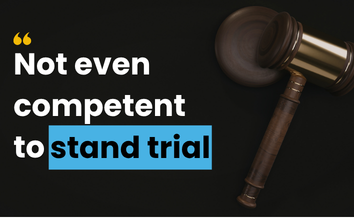
“We are prosecuting people, and we’re having them evaluated, and they’re not even competent to stand trial. Many times, they’re sitting in prison.” — Sean McCormack, Cumberland County District Attorney.
McCormack, who has practiced law for nearly 36 years, told WGAL that cases involving mental health have surged dramatically, with competency hearings rising a hundredfold in just five years.
When Calls Become the Data
The clearest signal that a county is approaching a breaking point is what shows up in the call log. In Dauphin County, the co-responder program launched in 2020 with 396 calls for service. By 2025, that number had grown to more than 4,800. That’s not a gradual increase; it’s a system being overwhelmed in real time. Lower Paxton Township alone logged over 800 mental health calls in 2025.
What makes those numbers more striking is what they don’t represent: arrests. Of all individuals who came into contact with Dauphin County co-responders since the program’s inception, only 4% ever touched the criminal justice system. That’s the clearest available evidence that the calls being made to police were not, at their core, criminal in nature. They were health emergencies being routed to the wrong door.
“A mental health crisis can affect anybody. It doesn’t matter your race, your religion, or where you come from.” — Devon Chianos, Dauphin County Deputy Chief Co-Responder.
In Lancaster County, a peer co-responder program funded by the Pennsylvania Commission on Crime and Delinquency paired law enforcement with certified peer recovery specialists: individuals with lived experience of mental illness or addiction. Lieutenant Steven Heinly of the West Lampeter Police Department put it plainly: many people in crisis are transient, cycling through multiple jurisdictions. Each agency was spending time and resources on the same individuals. A shared co-responder changes that equation by providing continuity of care across municipal lines.
Recognizing the scale of the problem, the Shapiro administration has taken steps to build capacity. The Pennsylvania State Police partnered with Penn State Health to develop the Keystone Model of Crisis Management, a simulation-based training program now being rolled out to police academies and municipal departments across the commonwealth. The program teaches cadets to identify behavioral conditions, de-escalate without force, and connect individuals to behavioral health resources; treating a mental health call more like a medical encounter than a criminal one.
Co-Responder Program Warning Signs: What We Should be Watching For
Pennsylvania’s trajectory offers a clear set of co-responder program warning signs, indicators that a county or state is approaching the point where co-response stops being a good idea and becomes a necessity. If you’re a co-responder reading this, here’s what to look for in your own community:
1. Surging mental health call volume. A sustained, year-over-year increase in calls coded as mental health or behavioral crisis, especially if volume is doubling or more within a few years, signals demand that policing alone cannot absorb.
2. Rising competency hearings and mental health court caseloads. When district attorneys start noting dramatic increases in competency evaluations, it means untreated mental illness has moved from the street into the justice system. This is a lagging indicator; by the time it’s visible in court, the upstream crisis is already severe.
3. Officer-involved shootings linked to mental health crises. These are the most visible and tragic outcomes of a system without adequate alternatives. When these incidents cluster, it’s a sign that officers are being placed in situations they were never equipped to handle on their own.
4. Flat or cut county mental health base funding. If your county’s mental health budget has been stagnant for years, community-based services are quietly eroding even if no single dramatic cut has occurred. Track what your county spends per capita on mental health and compare it to population growth and inflation.
5. Jails and ERs absorbing crisis overflow. When emergency departments and correctional facilities become the primary points of mental health contact in a community, a co-response infrastructure is absent or inadequate. Look for reporting on ER “boarding” of psychiatric patients and rates of mental illness in your county jail population.
6. Staffing and retention problems in existing programs. As McCormack noted, low salaries make it hard to hire and keep qualified mental health professionals. If your program is struggling to fill positions, that’s a signal that the infrastructure is underfunded and a ready-made argument for administrators and county commissioners.
The Case for Amplifying Co-response Presence
Pennsylvania’s data makes the argument simply and powerfully: when you put the right responder in front of the right call, the outcome changes. A co-responder who finds a family arguing about food insecurity can connect them to services on the spot. A peer recovery specialist who knows what a mental health crisis feels like from the inside can establish trust in minutes that a patrol officer might spend an hour trying to build. And with only 4% of co-responder contacts ever entering the criminal justice system, the diversion rate speaks for itself.
For co-responders looking to make the case for expanding their programs, Pennsylvania offers a ready-made blueprint: document your call volume trends, track diversion outcomes, and connect those numbers to what is happening in your local courts and emergency rooms. The warning signs are the argument. The data is the evidence.
Dauphin County started in 2020 with 396 calls and four years later could barely keep up with demand. The question for every county without an adequate co-response program is not whether the need exists; it is whether the need exists. Pennsylvania has already answered that. The question is how long the gap stays open before the consequences become impossible to ignore.
Bibliography:
Chianos, Devon, et al. “Mental Health Crisis in Pennsylvania Prompts Surge in Co-Responder Programs.” WGAL News 8, 2025.
“Commission on Crime and Delinquency Spotlights Expansion of Violence Prevention & Crisis Response in Lancaster.” Pennsylvania Commission on Crime and Delinquency, Commonwealth of Pennsylvania, 8 Dec. 2025, www.pa.gov/agencies/pccd/newsroom/pccd-spotlights-expansion-of-violence-prevention—crisis-respon.
“Dauphin County Crisis Intervention Team.” Dauphin County Government, www.dauphincounty.gov/government/publicly-elected-officials/district-attorney/criminal-justice-advisory-board-(cjab)/dauphin-county-crisis-intervention-team. Accessed 16 Apr. 2026.
Ginder, Chelsea. “DA, Police: Pennsylvania Mental Health Crisis.” WGAL News 8, 2025, www.wgal.com/article/da-police-pennsylvania-mental-health-crisis/70628653.
—. “Susquehanna Valley Mental Health Crisis.” WGAL News 8, 2025, www.wgal.com/article/susquehanna-valley-mental-health-crisis/70784901.
Ohl, Danielle. “Key Reasons Pennsylvania’s Mental Health System Is Failing.” Spotlight PA, 1 Aug. 2025, www.spotlightpa.org/news/2025/08/pennsylvania-mental-health-failing-takeaways-health/.
“Pennsylvania’s Mental Health Crisis Demands Immediate Action.” PennLive, 2025, www.pennlive.com/opinion/2025/06/pennsylvanias-mental-health-crisis-demands-immediate-action-pennlive-letters.html.
“PSP and Penn State Health Train Cadets to De-Escalate Mental Health Emergencies.” Pennsylvania State Police Newsroom, Commonwealth of Pennsylvania, 31 Mar. 2026, www.pa.gov/agencies/psp/newsroom/psp-and-penn-state-health-train-cadets-to-de-escalate-mental-hea.