What’s in The Car?
While the goal of a community paramedic (CP) is often to keep the sirens silent, “proactive” doesn’t mean “unprepared.” A CP’s role is a delicate dance: they provide the steady, routine care that prevents a crisis, while remaining the most qualified person in the room if a crisis hits.
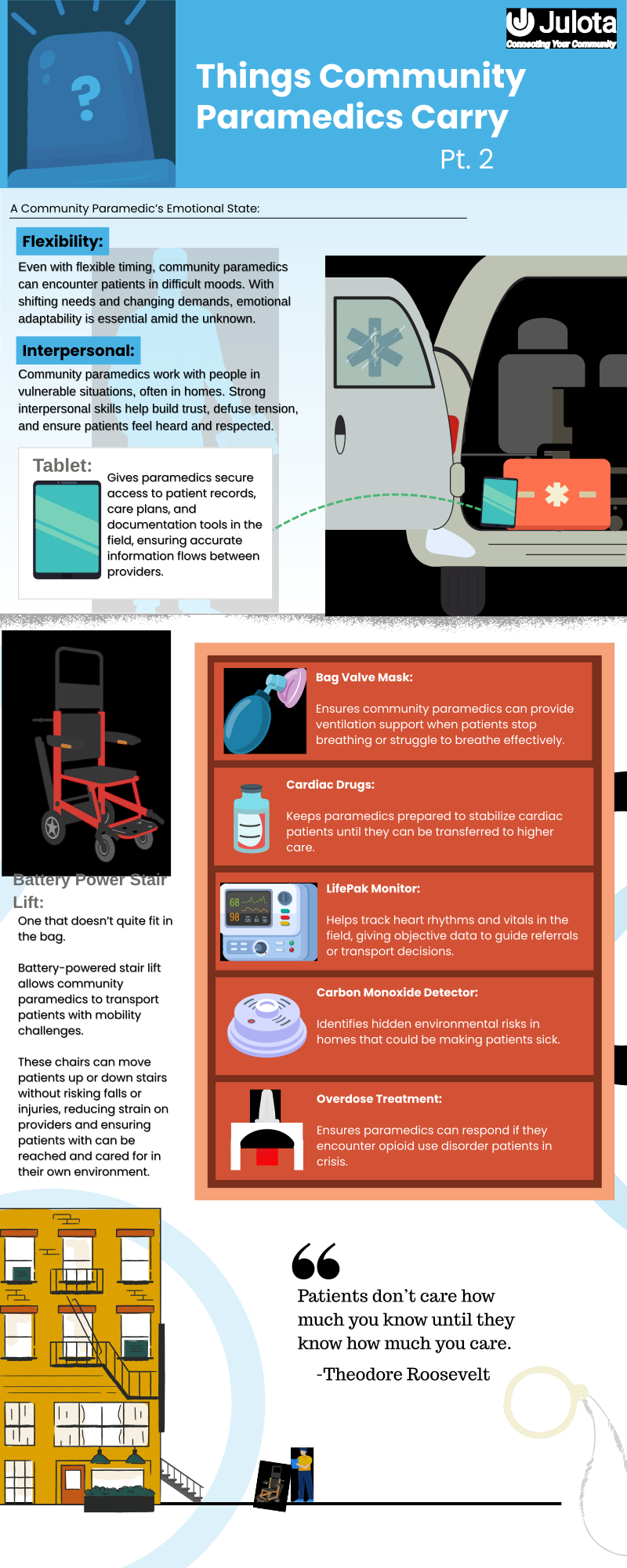
Today, we’re looking at the essential gear that bridges this gap, from the life-saving tools used in respiratory, cardiac, and overdose interventions to the digital “sixth sense” that helps them report and respond with precision. Some of the tools we’ll look at today include:
- Tablets
- Bag Valve Masks
- Cardiac Drugs
- LifePak Monitors
- Carbon Monoxide Detectors
- Narcan
- Stair lift chairs
This list doesn’t capture the full scope of community paramedicine if there is gear that has been left off or a facet of community paramedicine I’m neglecting let me know.
Digital Connectivity: The Tablet
In the modern healthcare landscape, information is just as vital as medicine, acting as the connective tissue between a patient’s home and the clinical team. By carrying a secure tablet, community paramedics gain real-time access to comprehensive patient records and interdisciplinary care plans, allowing them to make informed decisions that align with a patient’s long-term history. These documentation tools ensure that updates are shared with the broader healthcare system instantly, preventing dangerous gaps in care by maintaining a seamless flow of data between the field and primary providers.
Bag Valve Masks
Even when a crisis isn’t active, carrying a Bag Valve Mask provides the essential safety net needed to manage high-risk respiratory patients safely within their own homes. Having this tool at the ready allows paramedics to conduct thorough assessments and preventative treatments with the confidence that they can immediately stabilize a patient’s airway if their condition suddenly shifts.
Cardias Drugs
Carrying cardiac drugs allows community paramedics to act as a mobile stabilization unit, providing time-sensitive pharmacological intervention at the first sign of distress. This immediate access to life-saving medication ensures that a cardiac event can be managed on-site, preventing further heart muscle damage while a safe transition to a hospital is coordinated.
LIFEPAK Monitors
The LIFEPAK Monitor serves as a diagnostic powerhouse, delivering real-time heart rhythms and vitals that transform subjective observations into actionable, objective data. By utilizing these precise metrics, community paramedics can make high-stakes decisions with confidence, determining whether a patient requires immediate emergency transport or can be safely managed through a specialist referral.
Carbon Monoxide Detector
The Carbon Monoxide Detector acts as a vital diagnostic tool for the home itself, uncovering invisible environmental hazards that often mimic medical symptoms. By identifying these hidden risks during a routine visit, community paramedics can address the root cause of a patient’s illness before it escalates into a lethal emergency.
Overdose Treatment
Naloxone (Narcan)
Community paramedics carry Narcan as a fail-safe to instantly reverse respiratory depression during an active opioid overdose. Beyond the rescue, they use these encounters as a “touchpoint” to distribute leave-behind kits and provide immediate education to patients and families on how to prevent a future fatal event.
Buprenorphine
Unlike the rapid reversal of Narcan, community paramedics use Buprenorphine to manage withdrawal symptoms and cravings for patients motivated to start treatment. By initiating this “bridge” prescription in the field, they stabilize the patient’s physical distress, making it significantly more likely that the individual will successfully follow through with a long-term recovery program.
Stair Lift Chairs
One of the most significant challenges in community health is physical access. Not every patient lives in a ground-floor apartment. For patients with mobility challenges, the Battery Power Stair Lift is an essential piece of equipment that can sit in a community paramedic vehicle.
These chairs allow paramedics to move patients up or down stairs without risking falls or injuries. This reduces physical strain on the providers and, more importantly, ensures that patients can be reached and cared for in their own environment, regardless of the architecture of their home.
The Intangible Toolkit: Emotional State
Before a community paramedic even opens their medical bag, they utilize two of their most important assets: Flexibility and Interpersonal Skills.
-
Flexibility: Home visits are unpredictable. A paramedic may walk into a home expecting a routine check-up only to find a patient in a difficult mood or a family in crisis. Shifting needs and changing demands require a high level of emotional adaptability to ensure the patient receives the best care possible amid the unknown.
-
Interpersonal Skills: community paramedics work with people in vulnerable situations, often in the intimacy of their own homes. Strong interpersonal skills help build trust, defuse tension, and ensure patients feel heard and respected. This relationship-building is the foundation of Mobile Integrated Healthcare.
The Heart of the Mission
As the saying by Theodore Roosevelt goes, “Patients don’t care how much you know until they know how much you care.” The tools carried in a community paramedic vehicle, from the LifePak monitor to the tablet, are only as effective as the person using them. By combining high-tech medical equipment with deep emotional intelligence, community paramedics close the gap between clinical excellence and compassionate, home-based care.