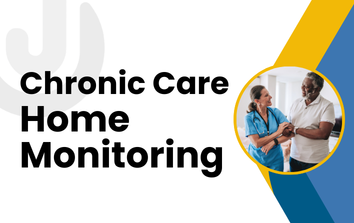
Chronic care home monitoring involves the use of remote healthcare trackers to deliver the care team real-time information on their patient’s health. Community paramedicine can leverage these technologies to improve its ability to respond to patients who need intervention with their chronic diseases. In the next few sections, we’ll give you real-world examples of the tools and techniques community paramedics use to manage people with chronic illnesses.
Chronic Care Home and Remote Monitoring Tools in Mobile Integrated Healthcare
In some ways, you could say that home health has operated with relatively little change over the past 200 years. By this, we mean that, in general, the physician, nurse, or paramedic would visit the patient at home, conduct an assessment as they would in a clinic, and then make suggestions for changes.
Sure, when the telephone was invented, it was a little easier to call for help. But besides these changes, the ability to monitor the patient has remained relatively unchanged (of course, the practice of medicine itself has undergone incredible improvements).
And now, over the last 20 years, finally, monitoring systems are being developed that can completely change the game for people with chronic illnesses who monitor their homes. Just as a nurse can sit at a desk in the hospital and monitor a patient’s heart rate, blood pressure, ECG, and pulse oximetry, now the technology exists for a nurse to remain in a clinic while still seeing the patient’s information at home.
Now, with that said, even though we can monitor a patient at home just as if they were in the hospital, that doesn’t mean it’s always appropriate. Indeed, most people would agree that if a person requires 24/7 monitoring (in the acute stages of an illness, etc.), they should receive this care at a hospital, where a physician, team of nurses, and surgical team are ready to intervene immediately should something go wrong.
The changes come with patient check-ins. For example, take someone who is currently stable but has a history of high blood pressure. It could be beneficial for them to take and transmit their blood pressure readings once a day, so that a team of health providers still has an idea of how their condition is trending. This routine “check-ins” method also allows the health team to catch medical emergencies early.
The goal of this article is to explain how all this might work in practice and how community paramedics are changing the game.
Here’s what we’ll cover in this discussion:
- How Community Paramedicine Relies on Technology to Support Chronic Care
- Why Remote Monitoring Tools Work Well with Mobile Integrated Healthcare
- Home Monitoring Tools for Diabetes Management: Chronic Care Tools
- MIH Remote Home Monitoring for Hypertension (High Blood Pressure)
- Community Paramedicine Home Monitoring for Chronic Heart Problems
Note: This is by no means an exhaustive list. If you’re a community paramedicine program and you’ve encountered an issue that could be solved with home monitoring systems, chances are the product already exists or is currently in development.
Our goal is to demonstrate what is possible and highlight how modern home monitoring tools can expand the reach of community paramedicine – sometimes drastically.
How Community Paramedicine Relies on Technology to Support Chronic Care
Community paramedicine wouldn’t really be possible without modern technology. The ability to have a centralized software platform that allows for seamless patient management among different health providers, the ability to have point of care tools such as I-stat’s and Ultrasound, and the ability to have a stable video call with a physician while on a visit, are all modern ideas – and the elements that make MIH-CP work.
In-home monitoring for chronic diseases, community paramedics already travel to a patient’s home, use advanced tools to check vital signs (ECG, glucometer, etc.), and then coordinate care with a physician.
This is all great, but there are a few limiting factors. First, there are only so many community paramedics. Second, there is only so much data a physician can screen in a day. These issues mean that, even in areas developing robust community paramedic programs, some people may not receive the care they need. The resources just aren’t always there.
But that’s where technology comes in. Remote home monitoring of chronic diseases addresses both problems. A), it allows greater reach of the community paramedicine team, and B), it allows the paramedic to take over some of that non-acute patient monitoring so that the physician can focus on the more pressing patient data.
We know this can sound a little confusing in an abstract form, so in the next few sections, we’ll provide specific examples of how all this works.
Why Remote Monitoring Tools Work Well with Mobile Integrated Healthcare
Mobile Integrated Healthcare is about taking common sense and applying it to every aspect of healthcare. Aside from being a healthcare model in which paramedics and nurses respond to people in their own environments, MIH represents a paradigm shift in healthcare. Some of the goals include reducing redundant, unnecessary tests, freeing up physicians for emergency and acute care, and reducing the number of people who require hospitalization.
In short, MIH is about shifting from a reactive healthcare system to a proactive healthcare system. It’s about finding problems before they become emergencies and performing routine “maintenance” on a person’s health to help them avoid catastrophic illnesses.
The reason mobile integrated healthcare-community paramedicine is such a prime subject for home monitoring systems is that these methods and technologies are in near-perfect alignment with MIH’s existing efforts.
Let’s look at an example.
Home Monitoring Tools for Diabetes Management: Chronic Care Tools for MIH
Diabetes is a notoriously difficult disease to manage. Not only do people need to be careful with their diet, but they often need to check their blood glucose levels regularly. In many cases, people do very well with this, but there are times when people are unable to check their own blood glucose (can’t remember, non-compliant, etc.), which can lead to some serious issues.
Companies now make blood glucose monitors that can sync up with the patient’s health chart, alerting their providers to any notable changes.
With these methods, instead of the community paramedic showing up and checking their blood sugar once a week or twice a month, the provider can get daily data. Not only that, but alerts can be set so that if a person’s blood sugar becomes too high or too low, the health provider will see it and have time to respond.
However, the alerts aren’t just for emergencies. The provider can monitor the trend of blood sugar levels. For example, if the provider can see that a patient’s BGL has increased by 5 points each day for 2 weeks, they can have someone respond and take action. In the past, this person would have waited until they had a hyperglycemic emergency before they sought care at an ER.
The patient doesn’t necessarily need to be checked daily. The goals of these remote monitoring systems are to help automate an incredibly important aspect of diabetic care.
MIH Remote Home Monitoring for Hypertension (High Blood Pressure)
Another important aspect of home health monitoring is high blood pressure. Hypertension is a silent killer. Blood pressure can spike unexpectedly, and these events can go unnoticed by patients until the symptoms become severe. The only problem – sometimes it’s too late.
With home monitoring of chronic high blood pressure, the provider can see when a person’s blood pressure spikes. Sure, sometimes it could be a fluke (and the person needs to retake their pressure), but at least the alert allows the provider to double-check their patient and ensure everything is okay.
This is much more preferable than treating someone for a stroke, which often causes irreversible damage.
Community Paramedicine Home Monitoring for Chronic Heart Problems
Another common chronic disease relates to heart issues. In these cases, a community paramedic can help monitor a patient’s EKG activity with a remote device. These types of tools are especially helpful if the patient has recently had a severe cardiac event.
For example, if a patient was recently treated for ventricular tachycardia, a potentially deadly heart arrhythmia, then upon discharge from the hospital, the patient could be fitted with a remote EKG monitor that will transmit a rhythm strip should the patient experience another cardiac event.
These tools not only give the patient peace of mind but also allow the health provider to take action before it’s too late.
Key Points: Home Monitoring to Improve Patient Outcomes
Home monitoring of chronic diseases has recently undergone a modern upgrade. Now, community paramedics can help take the burden off patients by fitting them with devices that can transmit data the moment it’s collected.
Some of the common data points these tools collect include blood glucose, blood pressure, and cardiac rhythms. As the world of healthcare marches forward, we hope to provide better care to patients and prevent negative health events before they occur.
Contact Julota for a simple demonstration on how their tools can help you sync up home monitoring information with the patient’s central health record.