

What Is a Youth Co-Responder Team?
A youth co-responder team pairs mental health professionals with law enforcement officers to respond to crises involving people under 18. The co-responder may ride with a patrol officer, stage separately from police, or handle follow-up and coordination of services. The model descends from the Los Angeles Police Department’s SMART team, launched in 1993, and it exists because young people in crisis fall between the school, health, juvenile justice, and family systems.
Key Takeaways
- Youth crises cross school, health, juvenile justice, and family systems, and no single one owns them.
- Youth co-responders need training specific to adolescents, not adult crisis training alone.
- The purpose is diversion from arrest and hospitalization toward age-appropriate care.
- Criticisms center on role confusion and the risk of police contact itself.
What Is the Role of a Youth Co-Responder?
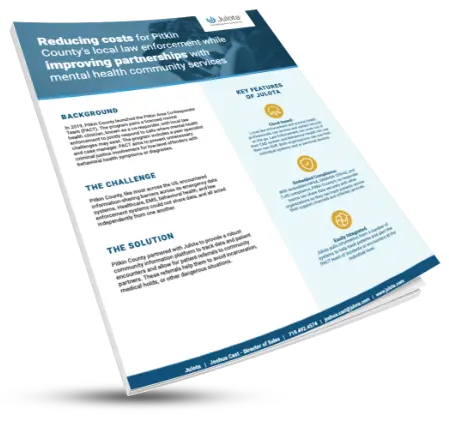
Co-responders, also known as Behavioral Health Response Teams, are mental health professionals embedded with LEOs (Law Enforcement Officers). As per Julota, the Youth co-responder may be riding with a patrol officer, or staged separately from police, and/or responsible for follow-up and coordination of services after initial contact with LEOs.
As per the Portland Police, YCRTs (youth co-responder team) are specifically for reactive encounters between LEOs and teens and young adults behaving erratically, due to mental health and/or substance abuse. They may also act proactively to contact youth in their community who appear to be in distress or homeless.
Bille in the Law Enforcement Bulletin described this as a change in basic assumptions, reframing LEOs as guardians instead of warriors.
What Problems Do Youth in Crisis Face Across Systems?
Here is what I have seen over 25 years in behavioral health care:
According to Cutler in WCAX news and Missman, there may be a small number of individuals, including juveniles, who commit most of the petty crime in a community.
They do not commit serious enough offenses to be held on bail, or due to their juvenile offender status, they are ROR’d (Released on Own Recognizance) and promptly re-offend before they go court to answer for the initial offense. They receive Probation, which they promptly violate, and then may or may not serve a short sentence of 30-90 days.
Upon release they re-offend and the cycle continues. It is easy to say they don’t learn anything, but they have learned a lot: I can do what I want, and nothing will happen.
Nationwide, inpatient mental health facilities for youth as well as adults have been closed, and local jails have become de facto mental health wards. Without proper treatment, their mental health issues make it difficult or impossible for them to regulate their emotions, exercise proper judgement, or conform their behavior to community standards.
Without proper follow up and aftercare, Inpatient substance abuse rehabilitation alone has a dismal long-term rate of success. Youth are discharged from these programs to the street, dysfunctional families, and delinquent peers, and whatever progress they made in a control setting is promptly lost. I have seen people get discharged from a rehab at noon, and at 1:00 PM they are seeing their dealer.
Child protective services all too often fail to investigate reports of maltreatment and allow children to be victimized repeatedly. The foster care system is overloaded without sufficient foster parents available, and inadequate screening and oversight of prospective foster families. There is nowhere to put children and teens who are often much harder to place for adoption than babies. The state child protective services operate on the very outdated and misguided maxim of let’s keep the family together, which causes children to be returned to their abusers. In desperation they run away and live on the streets. Or they stay away from home as much as possible, and turn to drugs, alcohol, and sex for comfort.
Youth are vulnerable; their physical and emotional development, and lack of skills and financial resources can leave them with few options and make them easy targets. They are vulnerable to their aggressive peers and predatory adults. Runaways are prime targets for coercion into prostitution, and contemporary sexual & labor slavery1. They are vulnerable to addiction, and the home they fled from may be as unsafe as the streets, due to abuse and neglect. They flee to the streets, where they are victimized by life, and the cycle repeats.
Cutler in WCAX news discussed the cycles that are tiresome and demoralizing to all parties involved from LEOs, EMS, ER staff, prosecutors, public defenders, judges, COs (Corrections Officers) counselors, and the defendant’s family. Let’s not overlook the small business owners and their customers who deal with retail theft and vandalism. YCRTs may be able to break this cycle.
What Are the Purpose and Benefits of a Youth Co-Responder Team?
YCRTs can reduce the burden on LEOs and EMS (Emergency Medical Services) by preventing recidivism. Communities have what are referred to as frequent flyers, individuals who have chronic, almost daily interaction with law enforcement and emergency medical.
YCRTs are a way to interrupt this process, as many youthful repeat offenders have substance abuse issues, mental health problems, and not just lack of family and social support, but primary association with deviant peers who encourage unruly behavior.
The intention of a YCRT is to intervene early as possible; to provide immediate de-escalation and referral to appropriate sources. As police officers and mental health workers interact with the community, they will be recognized and known by youth on the street or who have chronic and persistent issues. This will provide a place for them to go; someone to talk to when stress is building to prevent escalation.
What Training Do Youth Co-Responders Need?
The Youth co-responders will be licensed behavioral health providers, which can include:
- Psychologists
- Licensed Clinical Mental Health Counselors
- Licensed Alcohol & Drug Counselors
- Licensed Clinical Social Workers
According to SAMHSA, these titles vary between states. These professional titles are heavily regulated at the state level and require years of training. There are variations in requirements between jurisdictions, but general requirements are:
- A bachelor’s degree, preferably in psychology, social work, sociology, criminology, or biology.
- A master’s degree in psychology, counseling, social work, or behavioral sciences.
- For a psychologist, A PhD or Psy.D. (Doctor of Psychology) 2
- Passing one or more written exams
- 2000-6,000 hours of supervised practice.
At the conclusion of this competitive process, which typically takes an eight-to-12-year investment, the candidate is eligible for licensure in one of the above titles and independent practice. This is noteworthy in that behavioral health care is a discipline distinct from law enforcement; LEO’s have been expected to fulfill this role mostly operating on intuition, good judgement, and experience.
How Effective Are Youth Co-Responder Teams?
A number of outcome studies have been done on the efficacy of YCR programs.
- A Florida study of 206 contacts by K.K. Childs showed 80% of contacts with a LEO and YCR resulted in de-escalation, vs. 17% with a LEO only in 327 contacts.
- Marcus & Stergiopoulos did a meta-analysis review of 62 articles that showed the Youth models aka YCRT programs led to positive or improved outcomes though many limitations in the study were noted.
- An Australian study by the Queensland Dept. of Youth Justice and Victim support found a 73% reduction in serious offenses (Burglary, car theft, and general theft) among repeat offenders at a six-month follow up after contact with YCRTs.
- A reduced rate of involuntary commitment assessments by LEOs and more appropriate disposition of suicide threats K.K. Childs and colleagues noted this can reduce stress on emergency psychiatric care. In an urban area, a hospital ER will see patients for suicidal ideation or erratic behavior where masters level crisis clinicians evaluate them. Every youth contacted on the street be a police officer and a co-responder for triage is one less seen at the ER.
- One study cited by Julota revealed substantial cost savings of about $350,000 per annum per co-responder, by triaging people from ER’s and Jails
What Are the Criticisms of Youth Co-Responder Teams?
There are concerns that civilian behavioral health providers will be in harm’s way on high-risk calls. A consideration is that EMS and Fire are also in harm’s way, and they have accepted that as part of the job. Behavioral health is a risk aversive field. Part of the paradigm shift is that YCRTs may be thought of psychological EMTs, who have accepted a degree of risk in this position.
There is a concern that emphasis on de-escalation will cause officers to hesitate to use force, endangering their lives and those of bystanders. There is also concern about mission creep; police officers drifting from enforcing the law to social work. Counterpoints are that necessity of force escalation may be reduced, and police officers have long been in the role of social workers and counselors, but without the years of formal training that behavioral health providers have.
Conclusion:
This model of intervention will require ongoing assessment and refinement to maximize officer and public safety, while reducing recidivism. LEOs will typically be the first contact with disturbed or homeless youth. Use of Co-responders is a relatively new trend in law enforcement. Youth co-responders may be able to intervene before the problems of a youth spiral out of control.