Mobile Integrated Healthcare (MIH) can improve HEDIS scores by acting as a real-time responder to essential parameters. For example, if there is a deficiency in the management of blood pressure in patients with diabetes, MIH teams can take action. If a health team needs to perform more depression screenings and responses, MIH can help fill in the gap. Not only that, but the documentation and data-collection principles used by MIH help achieve the goals of HEDIS.
If you’re a little confused, don’t worry. In the following sections, we’ll break it down in detail and explain exactly how MIH can improve HEDIS scores.

Why are HEDIS Scores Important (And How Mobile Integrated Healthcare Can Help)
There are two sides to HEDIS scores that all health systems should be aware of. First, there’s doing the work. By this, we mean that you must actually provide good care and meet the necessary parameters. Second, there’s measuring the data. By this, we mean you have data-collection tools strong enough to demonstrate that your health system meets the parameters.
Think of it like a college math test. You can know all of the answers and fully understand the material, but if you don’t know how to show your work during a test, you’ll end up getting a poor grade. The same is true for HEDIS.
As we discuss how the agile skills of a mobile integrated health team can help you improve HEDIS scores, remember two things: do the work, measure the work. If you have one but not the other, you will struggle to improve your score.
Here are some ways MIH can improve HEDIS Scores:
- Providing Improved Blood Pressure Management
- Assisting with Care Planning and Management for Older Adults
- Reduction in Hospital Readmissions
- Depression Screenings (Adult and Adolescent)
- Active Response to Real-Time HEDIS Data
- A Framework for Better Data Collection
There are many more ways MIH could help you improve your HEDIS score. The key is to take a good look at where you’re lacking, then ask yourself what steps you could take to make corrections. It’s within these kinds of conversations that you will find solutions.
Mobile Integrated Health Improves HEDIS Scores by Providing Improved Blood Pressure Management (For People with Diabetes and Hypertension)
One of the first markers that MIH can help with is related to high blood pressure, also known as hypertension. Why is this such a critical HEDIS measure? There are a few reasons.
First, hypertension in itself leads to other issues – acute and chronic. People with uncontrolled hypertension are at a higher risk of strokes, aneurysms, and heart attacks. Second, hypertension is also an indicator (rather than just a cause). For example, someone with diabetes will likely see worsening blood pressure if their condition is left uncontrolled.
As you might imagine, improving patients’ blood pressure (and demonstrating that your organization is active in screenings and follow-ups) is pretty essential. How can MIH help?
Community paramedics working within the MIH framework can assist with blood pressure regulation and management in multiple ways. At a basic level, community paramedics in the field can perform routine screenings without requiring the patient to travel.
On a deeper level, community paramedics can help people manage conditions such as diabetes by providing routine screenings, advice on managing their environment, and the ability to follow up after an adverse health event.
Mobile Integrated Health Improves HEDIS Scores by Assisting with Care Planning and Management for Older Adults
Another key area of HEDIS measurements is the management and care of older adults, particularly those aged 60-80. Within this category, we see people generally have higher rates of chronic illness, while also seeing a reduction in the ability to manage their own healthcare (sometimes due to loss of vision, hearing, tactile ability, or even cognitive issues such as Alzheimer’s).
For these people, close management of their overall health becomes critical. At a time in life when they might have more struggles than before, they also have more to manage than ever before. Mobile Integrated Healthcare teams can visit patients’ homes and assist with short- and long-term health management.
This means that MIH can help people schedule doctors’ appointments, organize their medications, and coordinate with healthcare specialists. Not only does this reduce the burden on the patient, but it also raises the likelihood that the patient will find long-term solutions.
Mobile Integrated Health Improves HEDIS Scores via Reduction in Hospital Readmissions
Another key HEDIS measurement is hospital readmissions. The fewer the better, particularly in the first thirty days after someone has been discharged. Mobile Integrated Healthcare has been shown to reduce readmissions through direct community action. Both of these goals are wrapped up in good care for the older adult. MIH helps fill those gaps. How?
When someone is admitted to the hospital for a chronic condition, they may spend an extended period in a hospital room. Not only does this speak to the challenges and severity of chronic diseases, but it also leads to a less obvious issue: the patient’s confidence and ability to manage their own care.
Think about it: you’ve been in the hospital for three weeks, and everything has been managed for you – medication times and doses, meals, movement. Then, all of a sudden, the patient is sent home. While their condition may have improved, this doesn’t mean they suddenly have the capacity to manage all aspects of their own care. The result? They try for a few weeks, and before you know it, they call an ambulance, head to the ER, and end up back on a hospital floor.
How do we break these cycles? Mobile Integrated Healthcare has been a resounding answer for many communities. MIH teams can meet patients at their homes on the day they are discharged from the hospital and help ease the transition to independent living.
HEDIS Depression Screenings (Adult and Adolescent)
Screening for depression is another way to improve HEDIS scores. There are measures for both adults and adolescents. Within this data point, the measurement doesn’t just look at screenings; it also considers follow-ups for people who need them based on their evaluation.
MIH teams can help with both of these measurements. Community paramedics can work with trained Mental Health professionals and go to a person’s home if the person meets screening criteria. From there, the mental health professional can decide whether the person needs follow-up care.
In this way, MIH can help improve HEDIS scores related to mental healthcare. The great thing about MIH is that it can act as the eyes and ears, as well as the hands – first, it finds issues, then fixes them.
Active Response to Real-Time HEDIS Data: How Mobile Integrated Health Improves HEDIS Scores
Each year, HEDIS and NCQA gather information. In many organizations, they are blind to their own standing until they receive their evaluation report. For this reason, there has been a push to develop data-collection tools that allow you to see how you are doing in real time and respond and make corrections before end-of-year reports.
When you implement both a transparent data collection tool and a team of MIH professionals, you give yourself the ability to see nearly real-time data and to make corrections during the year. This can go a long way toward improving your HEDIS score and building positive relationships with your payers and partners.
A Framework for Better Data Collection (One of the Building Blocks of MIH)
So what’s the key here? Good data collection. If you’re essentially flying blind when it comes to your HEDIS score, you will have very little power to improve it. Developing and adopting proven tools to capture the correct data at the right time will pay dividends in improving HEDIS scores.
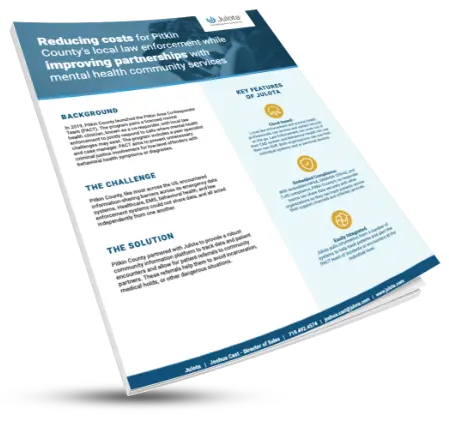
Consider a tool like Julota. Their interoperable software enables easy communication with organizations that don’t share a traditional affiliation, facilitating collaboration and care coordination.
Key Points: MIH and HEDIS Measures (What You Need to Know)
HEDIS measures are no small thing. If your healthcare organization remains flatfooted when it comes to making changes, you’re leaving a lot on the table. Mobile Integrated Healthcare is in a unique position to improve HEDIS scores by providing you with a framework for collecting data and the tools to respond.
MIH professionals can go into homes and turn the dials of real care: helping manage hypertension, reducing hospital readmissions, and advancing care coordination for older adults.
Overall, MIH offers a strong option if you’re trying to correct a poor HEDIS score. Contact Julota if you’d like to level up your program’s data collection, enabling your organization to view data faster and improve performance.